

Best Time to Visit Turkey: A Month-by-Month Guide (2026)

The short answer: the best time to visit Turkey is spring (April–May) and autumn (September–October). In those windows the weather is mild across most of the country, the big sights in Istanbul and Cappadocia are pleasant to walk, and you dodge both the July–August heat and the crowds that come with it. Summer is the time for the coast and the beaches; winter is cheap, quiet, and surprisingly magical if you want snow on the fairy chimneys or a few days on the ski slopes.
Turkey is a big country with several climates running at once, so the “right” month really depends on what you came for. As a Singapore-based DMC that runs Turkey groups year-round, here is how we actually advise clients — month by month, region by region, and by the experience you’re chasing.
Turkey weather month by month
| Month | Istanbul | Cappadocia | Coast (Antalya/Bodrum) | Crowds |
|---|---|---|---|---|
| January | Cold, wet (3–9°C) | Freezing, snow (-4–4°C) | Mild, rainy (6–15°C) | Very low |
| February | Cold (3–10°C) | Cold, snow likely (-3–6°C) | Mild (7–16°C) | Very low |
| March | Cool (5–12°C) | Cool, thawing (0–11°C) | Mild (9–18°C) | Low |
| April | Mild, blooming (8–17°C) | Mild days (4–17°C) | Warm (12–22°C) | Building |
| May | Warm, lovely (13–22°C) | Warm, clear (8–23°C) | Hot, sea warming (16–27°C) | Moderate |
| June | Warm (17–27°C) | Hot, dry (12–28°C) | Hot, beach season (20–31°C) | High |
| July | Hot, humid (20–29°C) | Very hot, dry (15–30°C) | Very hot (24–34°C) | Peak |
| August | Hot, humid (21–30°C) | Very hot, dry (15–30°C) | Very hot (25–35°C) | Peak |
| September | Warm, pleasant (17–27°C) | Warm days (10–26°C) | Hot, sea warmest (22–32°C) | High |
| October | Mild (13–21°C) | Cool, crisp (5–19°C) | Warm (17–27°C) | Moderate |
| November | Cool, wet (9–16°C) | Cold, first snow (0–11°C) | Mild (12–21°C) | Low |
| December | Cold, wet (5–11°C) | Freezing, snow (-3–5°C) | Mild, rainy (8–16°C) | Low |
Read across one row and you can see why a single trip date can feel completely different depending on the region. In May, Istanbul is in the low 20s while Antalya is already beach-warm. In January, the coast is a mild 15°C while Cappadocia sits under snow. Temperatures shown are typical daily lows and highs; pack layers in the shoulder seasons because mornings and evenings can be cool even on warm days.
Spring and autumn: the best all-round seasons
If you only remember one thing, remember the shoulders. April–May and September–October are the sweet spots for a classic Turkey trip that mixes Istanbul, Cappadocia and a bit of coast. Days are warm without being punishing, the light is good for photos, hotel rates sit below their summer peak, and the queues at Hagia Sophia, the Blue Mosque and the Goreme open-air museum are far shorter than in high summer.
Spring brings tulips and green hillsides — Istanbul even runs a tulip festival in April. Autumn keeps the sea warm enough to swim into October while the inland heat has broken. Both seasons give Cappadocia its best hot-air-balloon conditions: stable, calm mornings mean balloons fly on a high proportion of days. For most travellers, these are simply the most comfortable months to be on the ground.
Summer beaches and winter snow
Summer (June–August): peak season and the coast
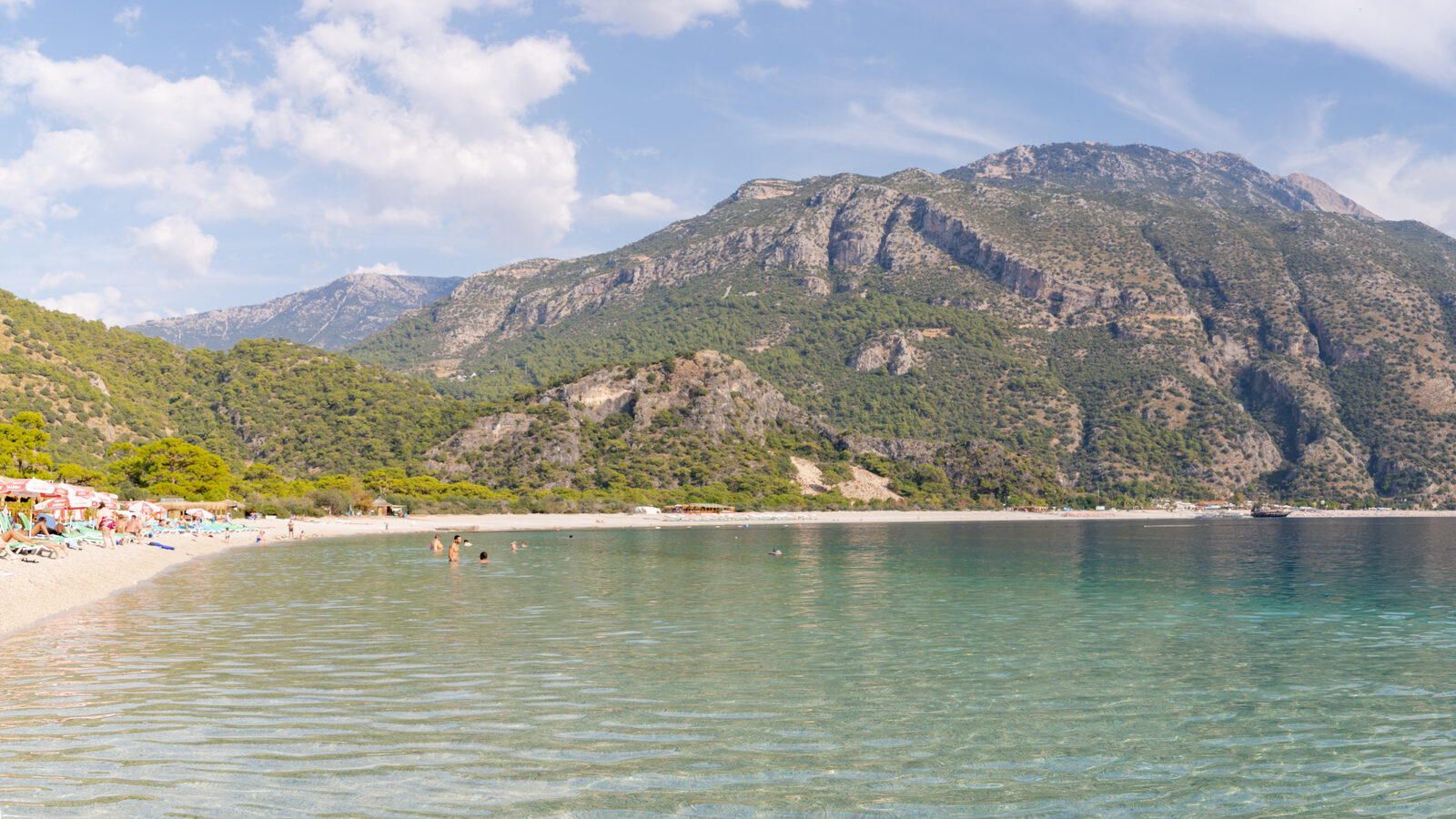
Summer is hot and busy. The Aegean and Mediterranean coast — Bodrum, Marmaris, Fethiye, Antalya — comes alive, with warm seas, long beach days and a buzzing nightlife. This is the right time if a Turkish beach holiday is the point of the trip. Inland is a different story: Cappadocia and the central plateau bake under dry 30°C-plus heat, and Istanbul gets hot and humid. You can absolutely combine city, Cappadocia and coast in summer; just start sightseeing early, build in a midday break, and expect peak prices and full sites.
Winter (November–March): snow, ski and quiet cities
Winter is Turkey’s quiet, low-price season — and it has its own magic. Cappadocia under a dusting of snow, with balloons drifting over white fairy chimneys, is one of the country’s most striking sights. The central interior and the east get genuine cold and snow, and ski resorts such as Uludag (near Bursa) and Palandoken (near Erzurum) run from roughly December to March. Istanbul stays open and atmospheric — fewer tourists, cosy tea houses, the occasional snow on the Bosphorus — though it can be grey and wet. The trade-off in winter is shorter daylight, some coastal businesses closed for the season, and a higher chance balloons are grounded on bad-weather mornings.
Best time to visit Turkey for…
Cappadocia hot-air balloons
Balloons fly year-round but need calm, clear mornings, so the highest flight rates come in the stable shoulder months — roughly April–June and September–October. Summer flies often too. Winter flights are gorgeous over snow but get cancelled more frequently due to wind and fog, so build in a spare morning if balloons are a must.
The coast and beaches
Beach season on the Turkish riviera runs roughly May to October. June and September are the pick — hot and sunny but a notch less crowded than July–August, and the sea is at its warmest in late summer and early autumn.
Istanbul sightseeing
Istanbul works any time, but it’s most comfortable on foot in April–May and September–October. Summer is hot, humid and packed; winter is cheap and atmospheric but cold and wet.
Budget travel
The cheapest time to visit Turkey is winter, November to March (excluding the Christmas–New Year peak). Flights and hotels are at their lowest, and the cities are uncrowded. The shoulder months also offer good value before summer rates kick in.
Region notes: Istanbul vs Cappadocia vs the coast
- Istanbul — a true year-round city. Best in spring and autumn for walking the old city; summer is hot and crowded; winter is quiet and moody.
- Cappadocia — fantastic in spring and autumn, when balloon mornings are most reliable and hiking the valleys is comfortable. Summer is hot but dry; winter brings unforgettable snow scenes but more cancelled flights.
- The coast (Antalya, Bodrum, Fethiye) — a seasonal beach destination, roughly May–October. Outside those months many resorts wind down, though Antalya stays mild enough for a winter city break.
One scheduling note: the dates of Ramadan and the Eid holidays shift earlier each year on the Western calendar. Turkey is fairly relaxed for visitors during Ramadan — most restaurants and sights stay open — but domestic travel, hotels and transport get very busy over the Eid public holidays, so book well ahead if your trip overlaps. Check the year’s exact dates when planning.
How many days and getting around
A first trip that covers Istanbul, Cappadocia and one more region (the coast or Pamukkale) works well in 8 to 10 days. Distances are large, so domestic flights — Istanbul to Cappadocia (Kayseri or Nevsehir), Istanbul to Antalya — save a lot of time over driving, and intercity coaches and high-speed trains cover the rest comfortably. For a ready-made route and pacing, see our Turkey group tour itinerary, which lays out a tried-and-tested multi-city plan.
Frequently asked questions
What is the best month to visit Turkey?
May and September are the best all-round months. The weather is warm but not extreme across Istanbul, Cappadocia and the coast, the sea is swimmable, crowds are lighter than mid-summer, and balloon conditions in Cappadocia are reliable.
What is the cheapest time to visit Turkey?
Winter — roughly November to March, outside the Christmas and New Year peak — is the cheapest time to visit Turkey. Flights and hotel rates are at their lowest and the major cities are quiet, though the weather is cold and some coastal resorts close for the season.
What is the best time for Cappadocia hot-air balloons?
April–June and September–October offer the most reliable balloon flights, thanks to calm, clear mornings. Balloons also fly often in summer. Winter flights over snow are spectacular but are cancelled more often due to wind and fog, so allow a spare morning.
When is the best time for the Turkish coast?
The beach season runs from about May to October. June and September are ideal — hot and sunny but less crowded than July and August — and the sea is warmest in late summer and early autumn.
Is winter worth it in Turkey?
Yes, if you want low prices, quiet cities and snow scenery. Cappadocia under snow is stunning, Istanbul is atmospheric without the crowds, and ski resorts run from December to March. Expect cold weather, shorter days and a higher chance of grounded balloon flights.
What are the hottest months in Turkey?
July and August are the hottest months. The coast regularly hits the mid-30s°C and inland Cappadocia and the central plateau are hot and dry, while Istanbul turns hot and humid. Start sightseeing early and plan a midday break if you travel then.
Plan your Turkey trip
Whatever month you choose, the difference between a good Turkey trip and a great one usually comes down to pacing, the right hotels, and getting balloon and coast timing right. As a Singapore-based DMC we handle all of that on the ground — see what we do on our Turkey DMC page, browse the Turkey group tour itinerary, or contact us for a tailored quote built around your travel dates.
Hero image: Wolfgang Moroder, CC BY-SA 3.0, via Wikimedia Commons. Oludeniz beach: dronepicr, CC BY 2.0, via Wikimedia Commons.

Travel DMC Group
Travel DMC Group is a B2B destination management company handling ground services — hotels, transfers, guided tours, MICE and group logistics — across Asia, the Middle East and the Caucasus. These guides are written by our in-house operations and product team from first-hand experience running group departures.
Recommended Posts
How Many Days Do You Need in Turkey? (2026 Guide)
June 22, 2026

Turkey Group Itinerary: Istanbul, Cappadocia & Beyond
June 19, 2026

What Is SIC in Travel? SIC Full Form, Meaning and How SIC Transfers Work
September 9, 2026