
Best Time to Visit Cambodia: A Month-by-Month Guide (2026)
The best time to visit Cambodia is the dry season, roughly November to April, when the rains stop, the humidity drops and the temples of Angkor stand against clear blue skies. Within that window, November to February is the sweet spot — cool, comfortable, and the most pleasant time to spend long days walking Angkor Wat. The flip side is that these are also the busiest, priciest months. Below is the month-by-month breakdown we give our own travellers, plus the best time to go for the temples, the coast, the capital and a tighter budget.
Cambodia weather month by month
| Month | Temperature & weather | Season | Crowds |
|---|---|---|---|
| January | 22–32°C, dry, sunny, low humidity | Dry / cool | Peak |
| February | 23–33°C, dry, warm and clear | Dry / cool | Peak |
| March | 25–35°C, dry, heat building | Hot | High |
| April | 27–37°C, hottest month, very humid late month | Hot | Moderate |
| May | 26–35°C, first heavy rains arrive | Hot / early wet | Low |
| June | 25–33°C, afternoon downpours, green | Wet / green | Low |
| July | 25–32°C, regular short rains, lush | Wet / green | Low |
| August | 25–32°C, frequent rain, very green | Wet / green | Low |
| September | 24–32°C, wettest month, moats full | Wet / green | Low |
| October | 24–31°C, rains easing late month | Wet / shoulder | Moderate |
| November | 22–31°C, dry returns, fresh and clear | Dry / cool | High |
| December | 21–30°C, dry, coolest and most comfortable | Dry / cool | Peak |
Cambodia is tropical, so it is warm all year — the real variable is rain, not temperature. The country swings between a dry season (November–April) and a wet, monsoon-driven green season (June–October), with March–May acting as a hot bridge between the two. Coastal areas around Sihanoukville and the islands run on a slightly different rhythm and can stay drier a little later, which we cover below.
Dry season (Nov–Apr): the best months for Angkor
The dry season is when most people should plan to visit. Skies are clear, the chance of rain is low, and you can spend full days at the temples without getting caught in a downpour. The standout months are November, December, January and February: daytime highs sit in the high 20s to low 30s, mornings and evenings are genuinely cool, and the humidity that makes the rest of the year sticky largely lifts. December and January are the most comfortable of all.
The trade-off is simple: these are the busiest months. Angkor sees its biggest crowds, hotels in Siem Reap fill up, and prices peak around Christmas, New Year and Chinese New Year. If you want cool weather but slightly thinner crowds, aim for late November or the first half of February rather than the holiday weeks. Book accommodation and any guided temple days well ahead for travel between mid-December and early January.
Hot season (Mar–May) & green/wet season (Jun–Oct)
From March the heat builds quickly, and April is the hottest month of the year, with temperatures regularly pushing past 35°C and feeling hotter still with the humidity. It is still dry and you will get clear temple photos, but plan for early starts, midday breaks and plenty of water. The upside is that crowds thin out as the holiday season ends, and April brings Khmer New Year, the country’s biggest celebration.
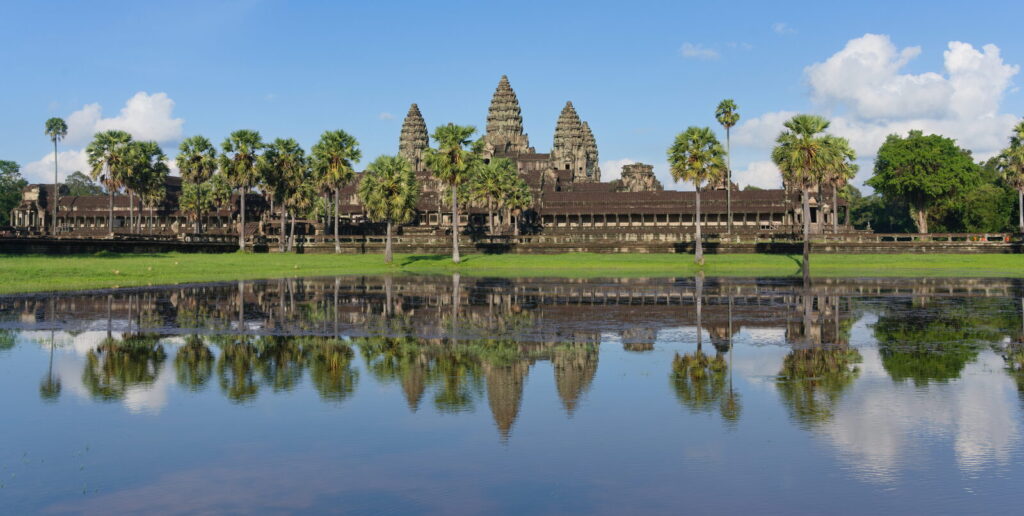
The green season runs roughly June to October, driven by the southwest monsoon. This does not mean all-day rain — the typical pattern is a sunny or cloudy morning followed by a heavy afternoon or evening downpour that clears within an hour or two. September is the wettest month. In return, the countryside turns a vivid green, the Angkor moats and reflecting pools fill up for the best mirror-image photos, the temples are blissfully quiet, and hotel and tour prices drop. With a flexible plan that keeps mornings free for sightseeing, the green season is an underrated time to visit Cambodia.
Best time to visit Cambodia for…
Angkor Wat & Siem Reap
November to February is ideal — cool, dry mornings make the long temple days far more pleasant. For the famous Angkor Wat sunrise, arrive at the western moat by around 5:00–5:15am to claim a spot by the reflecting pools; the dry-season sky gives the cleanest silhouette, while the green season fills the pools for the best reflections. If you can only visit in the heat of March–April, front-load the major temples into the early morning.
The coast & islands (Sihanoukville, Koh Rong)
The beaches and islands are at their best in the dry season, roughly November to April, with calm, clear water and reliable sun ideal for Koh Rong and Koh Rong Sanloem. The coast can hold onto good weather slightly later into the season than inland Cambodia. Avoid the peak monsoon months of June–September here, when rougher seas and rain can disrupt boat transfers to the islands.
Phnom Penh
The capital is comfortable in the cool, dry months of November to February, when sightseeing around the Royal Palace and riverside is easiest. As a city break it works year-round — green-season rain is short and predictable, and Phnom Penh combines well with a few days at Angkor in any season.
Budget & smaller crowds
For the lowest prices and the quietest temples, travel in the green season, June to October (September is cheapest of all). You trade reliable afternoons for noticeably lower rates, lush scenery and full Angkor moats. The shoulder weeks of late October–early November and May are a smart compromise: better value than peak season, with weather that is improving or only just turning.
Festivals & key dates
Khmer New Year (Choul Chnam Thmey) falls in mid-April, usually around 13–16 April, and is the biggest holiday of the year. Cities empty as locals return to their home provinces, temples come alive, and you will run into water- and powder-throwing on the streets. It is a wonderful time to be in the country, but expect closures, busy domestic transport and a festive, slightly slower pace — plan logistics around it.
The Water Festival (Bon Om Touk) takes place in November, on the full moon, and marks the dramatic reversal of the Tonle Sap river’s flow. Phnom Penh hosts spectacular long-boat races on the riverfront and huge crowds — book the capital well ahead if your dates overlap. November’s cool, dry weather makes it a great time to combine the festival with a temple trip.
How many days & getting there
For a first trip, 7 to 10 days is a comfortable amount of time: three days for Angkor and Siem Reap, two for Phnom Penh, and the rest for the coast or a slower pace. With less time, a focused 3–4 day Siem Reap temple trip still covers the highlights. Most international visitors fly into Phnom Penh or Siem Reap, often via Bangkok, Singapore or Kuala Lumpur, and Cambodia pairs naturally with Thailand or Vietnam on a wider Southeast Asia itinerary.
For tailored temple itineraries, private guides, hotels and transfers, see our Cambodia DMC services — we handle the on-the-ground logistics so your dates, season and pace all line up.
Frequently asked questions
What is the best month to visit Cambodia?
December and January are the best months overall. They fall in the cool, dry season with comfortable temperatures, low humidity and clear skies — ideal for long days at Angkor. The trade-off is that they are also the busiest and most expensive months, so book ahead.
When is the best time to visit Angkor Wat?
November to February is the best time for Angkor Wat, with cool, dry mornings that make the long temple days far more pleasant and clear skies for sunrise. The green season (June–October) is quieter and fills the moats for the best reflections, but expect afternoon rain.
What is the cheapest time to visit Cambodia?
The green season, June to October, is the cheapest time to visit Cambodia, with September offering the lowest hotel and tour prices. You trade reliable afternoons for short, heavy downpours, plus lush scenery and far smaller crowds at the temples.
Is the wet season a bad time to visit Cambodia?
No — the wet (green) season can be a great time to visit. Rain usually comes as a short afternoon downpour rather than all-day drizzle, so mornings are free for sightseeing. The reward is greener landscapes, full Angkor moats, far fewer crowds and the lowest prices of the year.
What are the hottest months in Cambodia?
March, April and May are the hottest months, with April the peak — temperatures regularly exceed 35°C and humidity climbs late in the period. It stays dry, so the temples are clear, but plan early starts, midday breaks and plenty of water.
When is the best time to visit Cambodia’s islands?
The dry season, roughly November to April, is the best time for Koh Rong, Koh Rong Sanloem and the southern coast, with calm, clear water and reliable sun. The coast can stay drier slightly later than inland Cambodia; avoid June–September, when rougher seas can disrupt boat transfers.
Plan your Cambodia trip
Whether you want the cool, clear temples of December or the green, quiet, good-value moats of September, the right timing makes all the difference. As a Singapore-based DMC, we build private Cambodia itineraries around your dates, budget and pace. Contact our team for a tailored quote and a season-matched plan for Angkor, the coast and beyond.
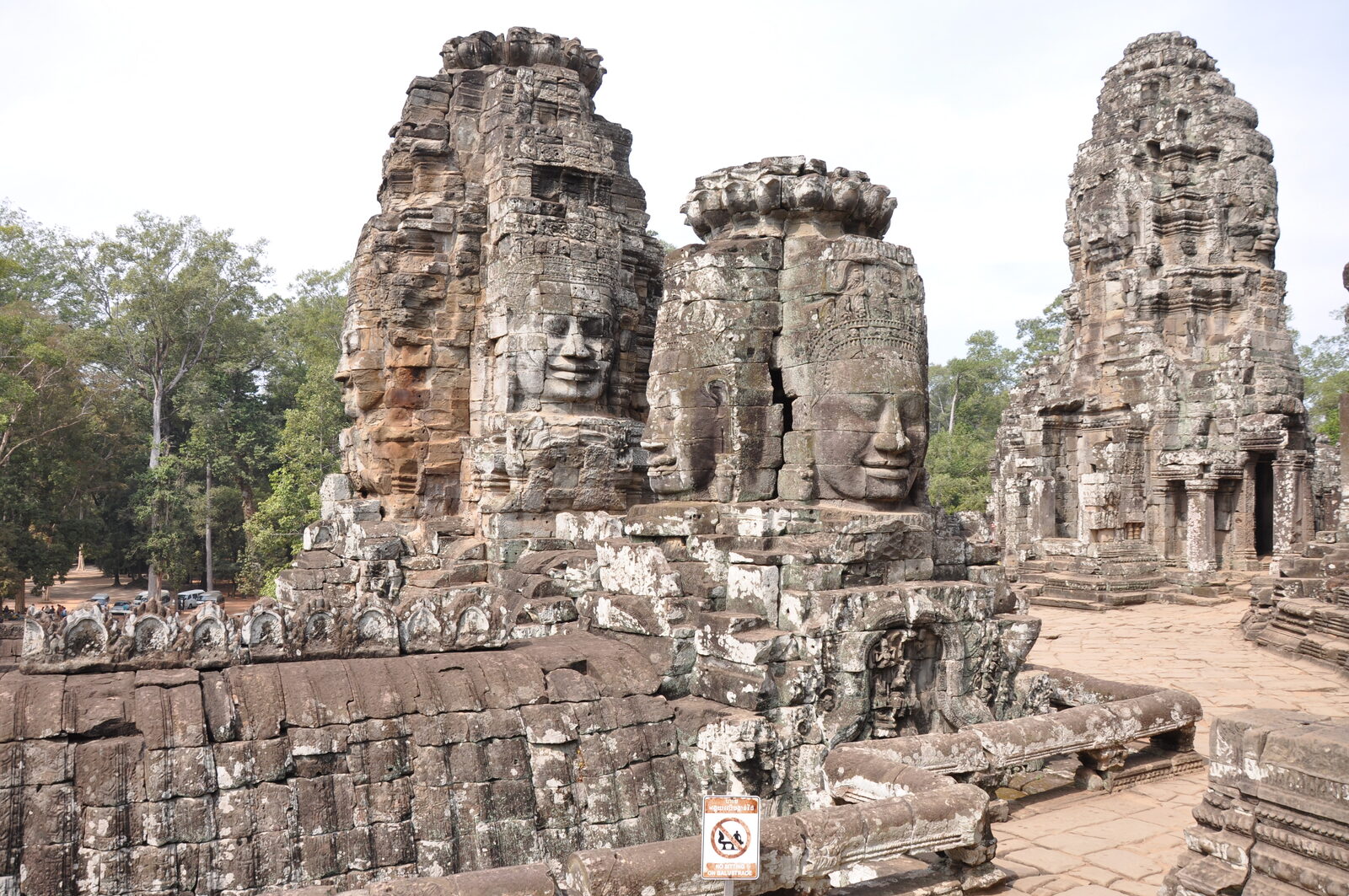
Hero image: Angkor Wat reflected in its moat, by Satdeep Gill, CC BY-SA 4.0, via Wikimedia Commons. Bayon faces by Jorge Láscar, CC BY 2.0, via Wikimedia Commons.

Travel DMC Group
Travel DMC Group is a B2B destination management company handling ground services — hotels, transfers, guided tours, MICE and group logistics — across Asia, the Middle East and the Caucasus. These guides are written by our in-house operations and product team from first-hand experience running group departures.
Recent Posts
How to Check an AI-Built Itinerary Before You Sell It
October 20, 2026