
Top Things to Do in Tbilisi: A First-Timer’s Guide (2026)
Tbilisi is having a moment, and it’s easy to see why. Georgia’s capital pairs cobbled old quarters and hilltop fortresses with a creative, fast-changing food and design scene, and it’s still gentle on the wallet compared with most European city breaks. We send a lot of clients here, and the question we hear most is simply: what are the best things to do in Tbilisi if it’s your first visit? This is the short, honest answer — the sights that actually earn a place on a tight itinerary, where to eat, the day trips worth the early start, and how to get around without overthinking it.
Explore the Old Town
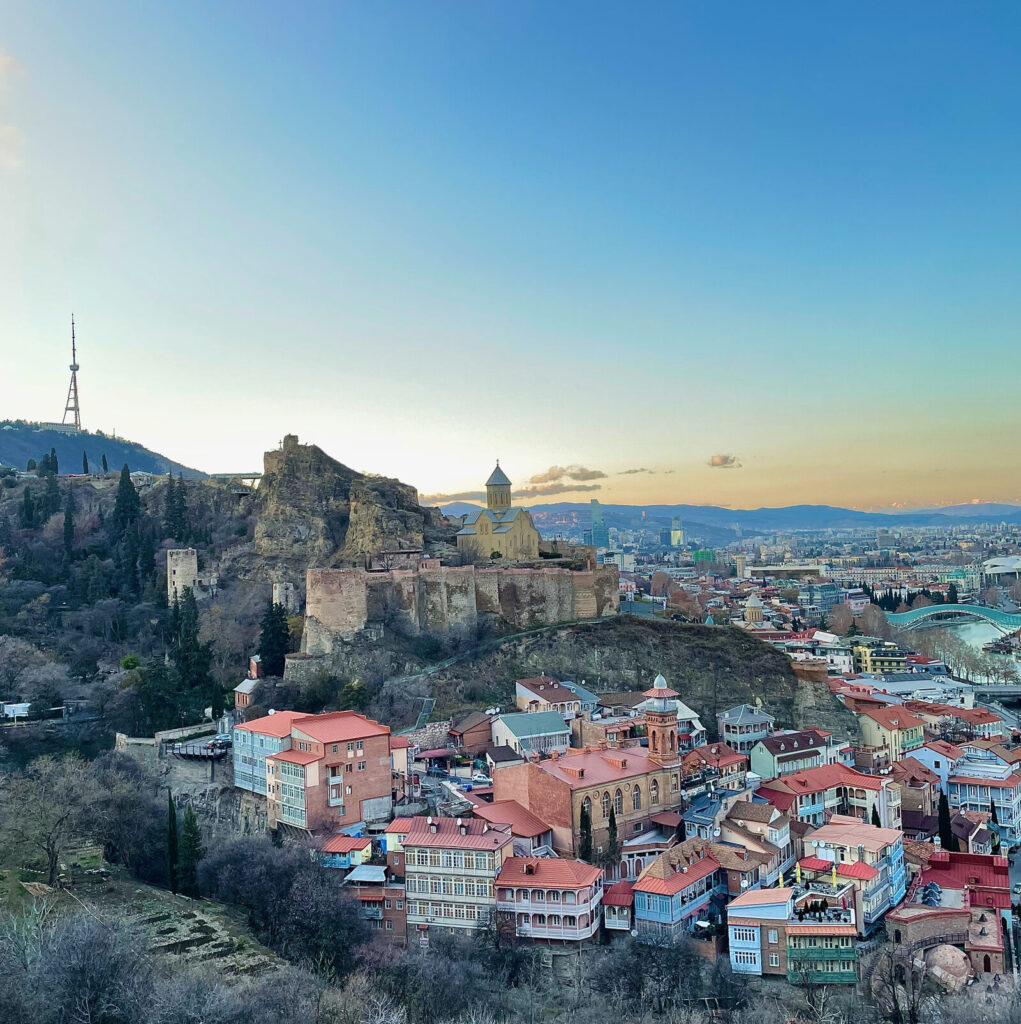
Start where the city did. Tbilisi’s Old Town (Kala) tumbles down the hillside below Narikala Fortress, a citadel with roots in the 4th century that was expanded right through the 17th. The easiest way up is the cable car from Rike Park, which floats you over the river for some of the best views in the city — over the rooftops, the church domes, and the Mtkvari river below. The fortress walls themselves are free to wander, and the Kartlis Deda (Mother of Georgia) statue stands on the same ridge.
Below the fortress sits Abanotubani, the sulphur bath district that gave Tbilisi its name — “tbili” means warm. The naturally hot, mineral-rich water has drawn bathers for centuries, and a soak in one of the brick-domed bathhouses is the most authentically local thing you can do here. Public baths like No. 5 are cheap and basic; private rooms at Chreli-Abano or the Orbeliani (Blue) Baths cost more but are far nicer. Right alongside, the small Meidan area and its bazaar of craft stalls and wine shops is a pleasant browse, and the little Leghvtakhevi waterfall is a two-minute walk up the gorge behind the baths.
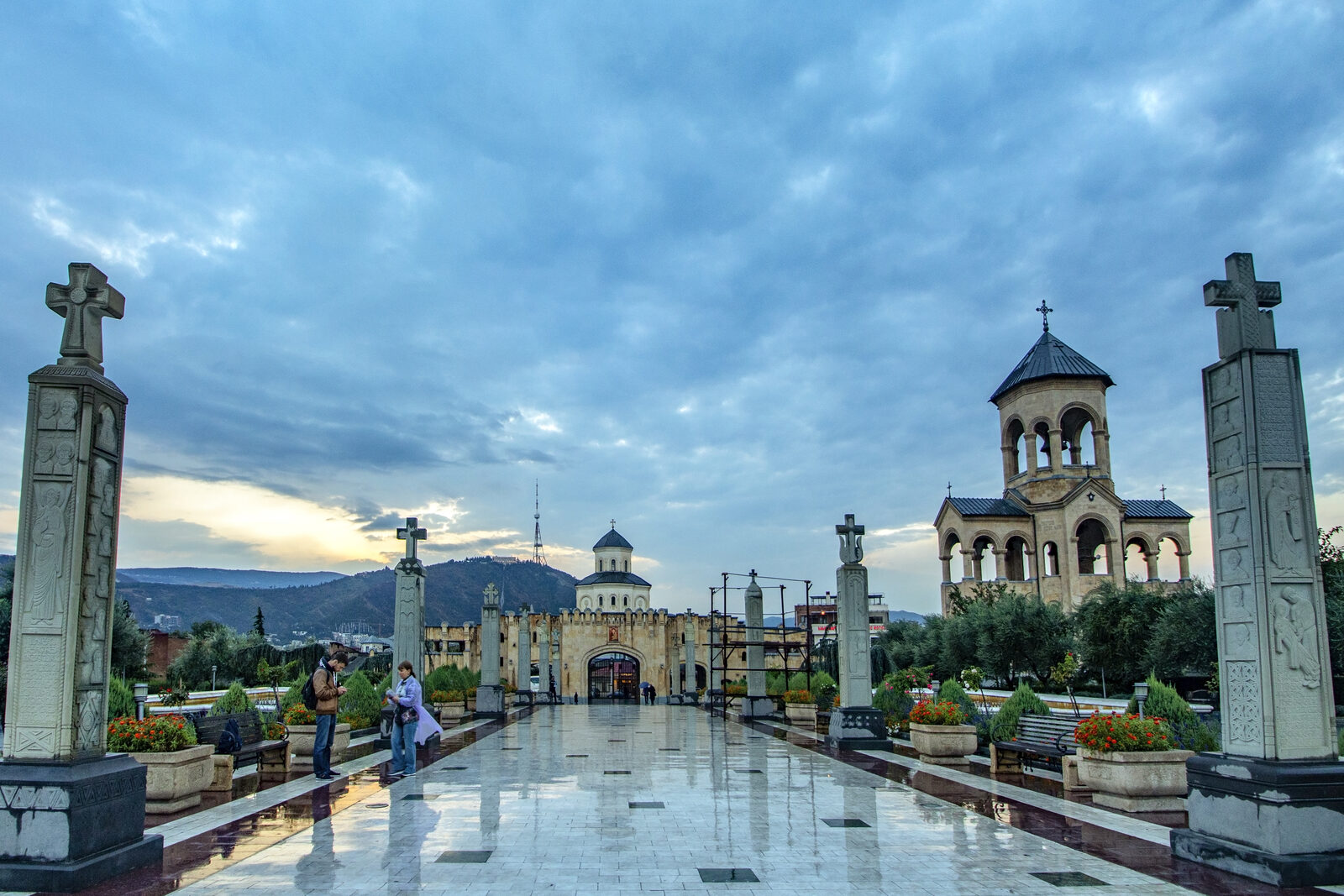
Tbilisi’s landmark sights
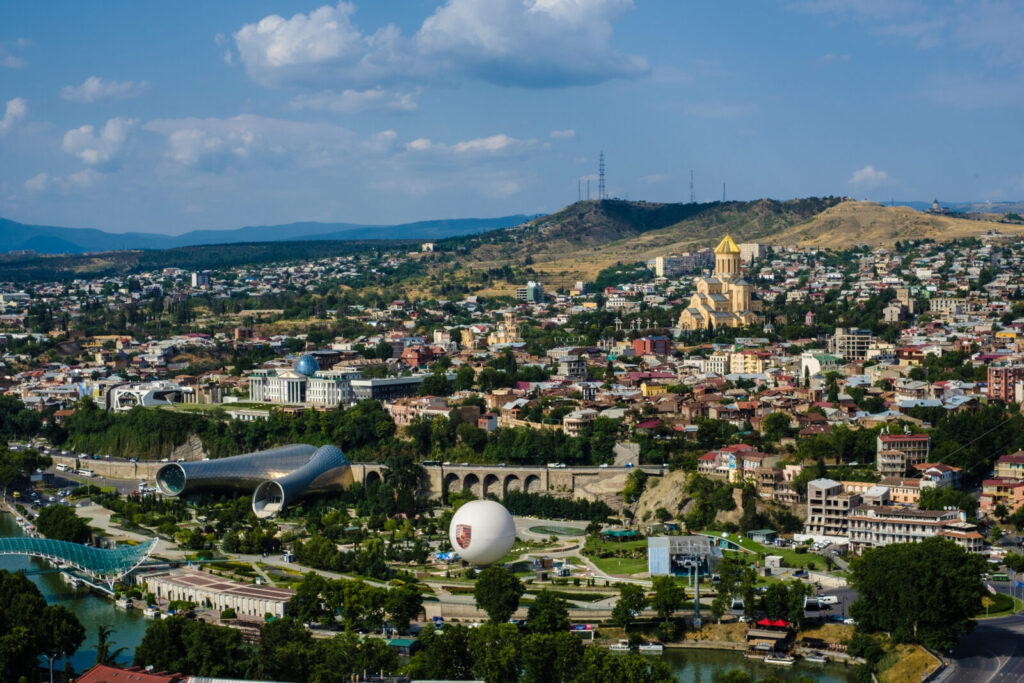
A handful of big-ticket sights anchor most first visits. Sameba — the Holy Trinity Cathedral — is Georgia’s largest church and one of the tallest Orthodox cathedrals anywhere; its gilded dome is the landmark you’ll keep spotting from across the city, and it’s especially striking lit up at night. The Bridge of Peace, a curving glass-and-steel pedestrian bridge over the Mtkvari, links the Old Town to Rike Park and is the modern counterpoint to all that medieval stone — worth crossing on foot, day and night.
Rustaveli Avenue is the city’s grand boulevard, lined with the opera house, the National Museum, theatres, cafés and shops; it’s the spine of the new town and a natural place to stroll. For the wide-angle view, ride the funicular up Mtatsminda, the mountain that looms over Tbilisi. The top has a small amusement park, restaurants and the best panorama in the city — entry to the park is free and the funicular runs from Chonkadze Street. If you like a rummage, time your visit for the weekend Dry Bridge flea market, a long-running open-air sprawl of Soviet kitsch, antiques, coins, jewellery and local art.
Eat and drink like a Georgian
Georgian food is one of the real reasons to come. Order khinkali — fat, twisted soup dumplings filled with spiced meat (or mushroom, or cheese). Pick them up by the topknot, bite a small hole, sip the broth, then eat the rest; leave the doughy knot on your plate, as the locals do. Then there’s khachapuri, the national cheese bread, in regional forms: the imeruli is a flat cheese-stuffed round, while the adjaruli arrives as an open boat of molten cheese topped with butter and a raw egg you stir in. It is gloriously excessive and you should order it at least once.
And the wine. Georgia is widely recognised as the cradle of wine, with an unbroken winemaking tradition going back some 8,000 years. The traditional method uses the qvevri — a large egg-shaped clay vessel buried underground to ferment and age the wine — a practice so distinctive that UNESCO inscribed it on its list of intangible cultural heritage. Try an amber (skin-contact) wine made the old way; it’s unlike anything from Western Europe. Most Tbilisi restaurants and dozens of dedicated wine bars pour Georgian labels by the glass, so you can taste your way through Saperavi, Rkatsiteli and Kisi without leaving the city.
Best day trips from Tbilisi
Tbilisi is a fine base, and three day trips stand out. Mtskheta, Georgia’s ancient capital and a UNESCO World Heritage Site, is only about 30–45 minutes away. Its Svetitskhoveli Cathedral is one of the holiest places in the country, and the 6th-century Jvari Monastery sits on a hill above town with a sweeping view over the meeting of two rivers. It’s an easy half-day, often combined with lunch in Mtskheta.
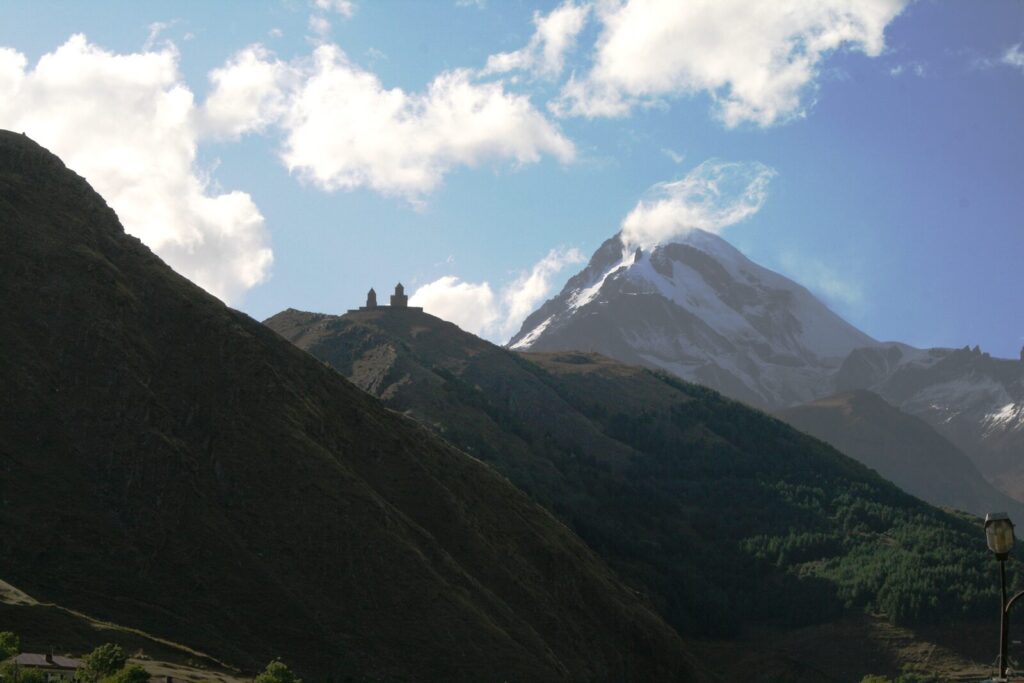
For high drama, head north up the Georgian Military Highway to Kazbegi (Stepantsminda). The reward is Gergeti Trinity Church, a 14th-century chapel perched at around 2,170m with the snowcapped Mount Kazbek (5,054m) behind it — one of the most photographed scenes in the Caucasus. It’s a long day (roughly three hours each way) but worth it; note the mountain pass can close in heavy winter snow. Finally, the Kakheti wine region to the east is the heart of Georgian winemaking — cellars, qvevri tastings and the pretty hilltop town of Sighnaghi make it the trip for anyone who took the wine section above seriously.
If you’re weighing Georgia against its neighbour for a group programme, our note on Georgia vs Azerbaijan for group tours breaks down the differences.
Practical tips: best time, getting around, how long to stay
Best time to visit: aim for late spring (May–June) or autumn (September–October), when days are warm but not punishing and the mountain roads are open. July and August get hot in the city; winter is cold but atmospheric, and good for Gudauri skiing if that’s your thing. The Kakheti grape harvest (rtveli) falls in late September into October — a lovely time for the wine country.
Getting around: central Tbilisi is walkable, but distances and hills add up. The metro is cheap and quick on its two lines (you’ll need a rechargeable MetroMoney card). For everything else, the Bolt app is the simplest option — rides across town typically run just a few dollars and you skip the language barrier. Shared minivans called marshrutkas handle longer routes and most day trips from the Didube terminal for next to nothing, though for Kazbegi or Kakheti many travellers prefer a hired driver or a guided tour.
How long to stay: give Tbilisi itself two to three days, then add a day or two for trips out. A comfortable first visit is four to five days; a week lets you fold in Kazbegi and a proper wine day in Kakheti without rushing.
Seeing Tbilisi with a DMC
Independent travel here is easy enough, but groups, incentives and MICE programmes are a different job — and that’s where we come in. As a destination management company, our Georgia DMC team handles the moving parts you don’t want to chase from abroad: licensed English-speaking guides, vetted vehicles and drivers, hotel blocks, restaurant takeovers, and the logistics of getting a coach safely up to Kazbegi or threading a wine-region day through multiple cellars. We build the itinerary around what your group actually wants — heritage, food and wine, adventure, or a mix — and run it on the ground so nothing falls through the cracks.
Frequently asked questions
Is Tbilisi worth visiting?
Yes. Tbilisi packs an atmospheric old town, hilltop fortress views, world-class food and 8,000 years of wine culture into a compact, affordable city — and it’s an excellent base for some of the Caucasus’s best day trips. For most travellers it punches well above its profile.
How many days do you need in Tbilisi?
Two to three days covers the city’s highlights comfortably. Add a day or two for day trips to Mtskheta, Kazbegi or Kakheti — so four to five days for a well-rounded first visit, or a full week if you want to see the mountains and wine country without rushing.
Is Tbilisi safe and good for first-timers?
Tbilisi is generally very safe, with low rates of violent crime and famously warm hospitality. Normal city common sense applies. It’s well set up for first-timers: English is widely understood in tourist areas, the Bolt app removes most transport friction, and the centre is easy to navigate on foot.
What is the best time to visit Tbilisi?
Late spring (May–June) and early autumn (September–October) are ideal, with warm, comfortable weather and open mountain roads. September into October also coincides with the Kakheti grape harvest. Summer is hot and winter is cold but atmospheric.
What is Tbilisi known for?
Tbilisi is known for its sulphur baths (the city is literally named after its warm springs), the Narikala fortress and old town, the gold-domed Sameba Cathedral, Georgian cuisine like khinkali and khachapuri, and being a gateway to Georgia’s ancient qvevri wine tradition.
How do you get around Tbilisi?
The centre is walkable; beyond that the two-line metro is cheap and fast (use a MetroMoney card), and the Bolt ride-hailing app is the easiest way to cross town for a few dollars. Marshrutka minivans cover day-trip routes from Didube station, though groups usually prefer a private driver or guided tour.
Plan your Georgia trip
Ready to turn this into a real itinerary? Tell us your dates, group size and interests, and we’ll put together a Georgia programme that runs smoothly from arrival to departure. Get in touch for a tailored quote, or read more about what our Georgia DMC services cover.
Hero photo: Ken Zuk, CC BY 2.0. Cathedral photo: Mostafameraji, CC BY-SA 4.0. Both via Wikimedia Commons.

Travel DMC Group
Travel DMC Group is a B2B destination management company handling ground services — hotels, transfers, guided tours, MICE and group logistics — across Asia, the Middle East and the Caucasus. These guides are written by our in-house operations and product team from first-hand experience running group departures.