

Egypt Group Tours: Nile Cruise vs Land Tour
Egypt for groups: one country, two very different trips
Few destinations move a group the way Egypt does. The Pyramids, the temples along the Nile, the painted tombs of the Valley of the Kings, a felucca drifting past Aswan at dusk — it delivers the kind of “I can’t believe I’m standing here” moments that fill a coach with conversation for days. For travel agents and tour operators, that pull translates into strong group demand across multi-generational families, special-interest history clubs, alumni associations and incentive groups alike.
But behind the postcard sits one planning question that shapes everything else: should your Egypt group tour be built around a Nile cruise, or run as a land-based program with hotels in each city? That single choice drives the budget, the daily pace, the hotel category, the transfer logistics and even how much your group will enjoy the experience. Get it right and the trip almost runs itself. Get it wrong and you spend the week firefighting early departures, long drives and tired travellers.
As a Singapore-based destination management company, we structure Egypt programs for agents around the world. Below is how we think about the cruise-versus-land decision, where to take a group, what it costs, and a sample 8-day itinerary you can adapt and sell.
Why run an Egypt group tour through a DMC
Egypt rewards local coordination more than almost any destination we operate. Site entry, guide licensing, cruise allocations, internal flights and the timing of major attractions all sit on the ground, and they shift with the season and with policy. Booking direct from abroad means stitching together a dozen suppliers with no single party accountable when a flight moves or a cruise reshuffles its sailing.
When you place an Egypt group tour with us, you get one contract and one point of contact for the whole chain: hotels, Nile cruise cabins, Egyptologist guides, air-conditioned coaches, domestic flights, site tickets and the security and convoy arrangements that still apply in parts of the country. We hold negotiated group rates, we manage rooming lists and special requests, and we have people on the ground who can re-sequence a day when a site closes or a sandstorm grounds an Abu Simbel flight. If you’re new to the model, our explainer on what a DMC is and does covers how the handover works between your agency and ours.
The big decision: Nile cruise vs land tour
Both formats visit broadly the same headline sights — Cairo at one end, Luxor and Aswan at the other. The difference is how your group moves between Luxor and Aswan, and where they sleep.
A Nile cruise puts the group on a floating hotel for three or four nights, sailing between Luxor and Aswan with temple stops along the way. A land tour keeps the group in city hotels and covers the same ground by road or short flights. Here’s how we weigh them for groups specifically:
| Factor | Nile cruise | Land tour |
|---|---|---|
| Pace | Relaxed; unpack once, sites come to you | More driving and check-ins; flexible routing |
| Accommodation | Cabins on board (smaller rooms, full board) | Full-size hotel rooms, wider category choice |
| Cost | Often better value (meals + transport bundled) | Can be higher once flights and meals are added |
| Logistics | Simpler; one base, fewer transfers | More moving parts to coordinate |
| Best for | First-timers, older or mixed-mobility groups, classic “bucket-list” trips | Groups wanting larger rooms, premium hotels, or a Red Sea add-on |
Our default recommendation for most groups is the cruise. It removes the two things that wear a group down — repeated packing and long road days — and the temples genuinely are easier to reach from the river. We reserve the pure land option for groups that prioritise full-size luxury hotel rooms, have specific dietary or accessibility needs that suit a fixed base, or want to tack on Red Sea beach days where a cruise doesn’t fit.
Where to take a group
Cairo & Giza
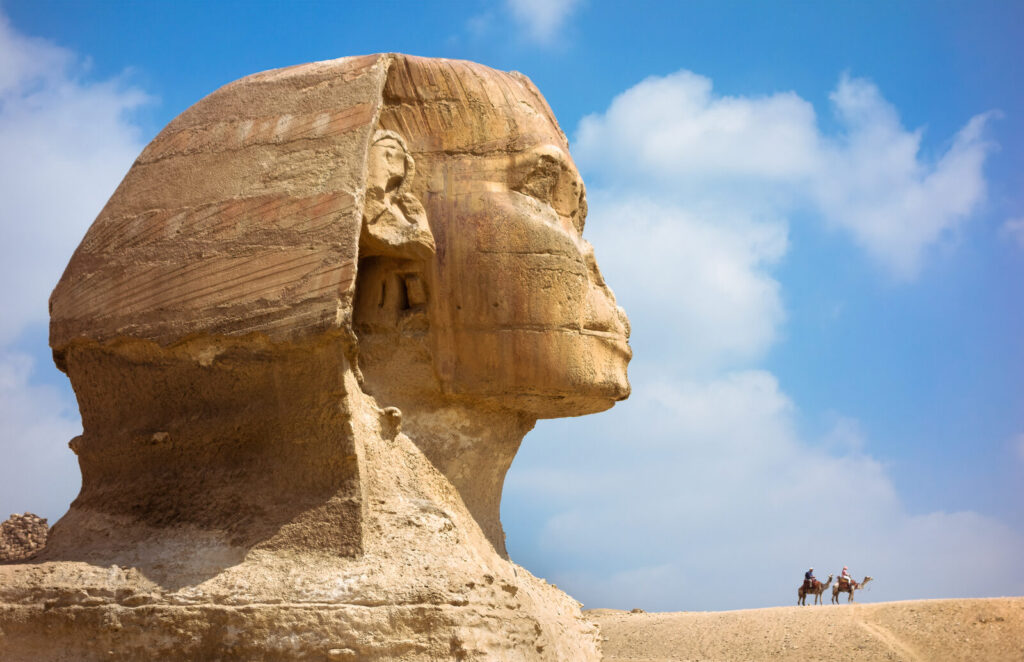
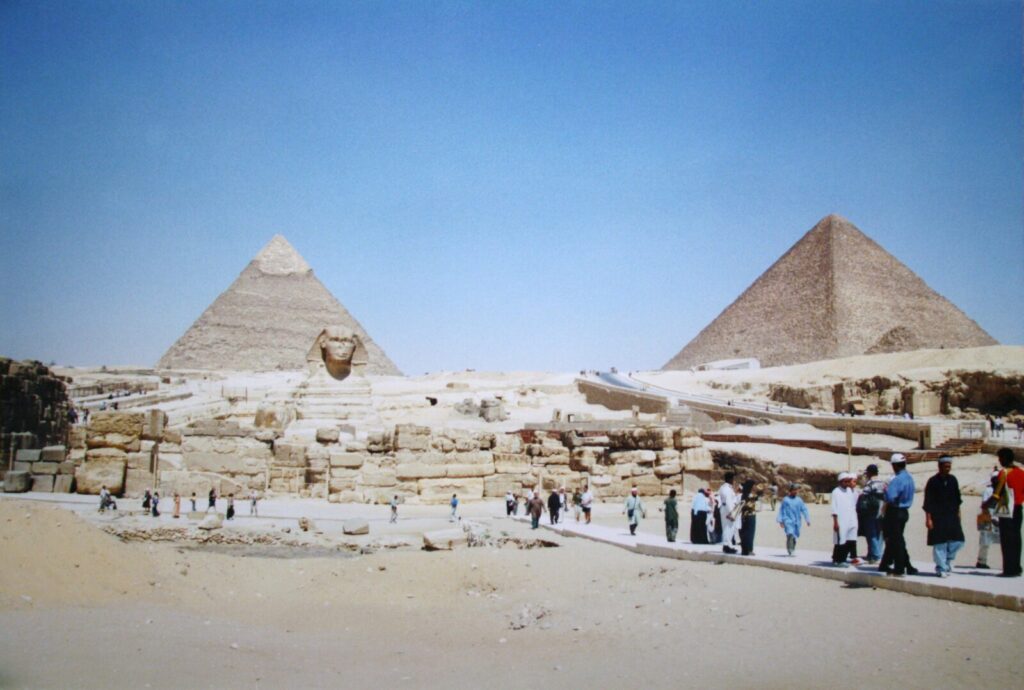
Almost every Egypt group tour begins here. The Giza plateau — the Pyramids and the Great Sphinx — is the anchor, and it photographs well even with crowds if you arrive early. The Grand Egyptian Museum near Giza now houses the headline collections, including the Tutankhamun holdings, and it is a major draw in its own right; we build in extra time for it. Old Cairo, the Citadel and the Khan el-Khalili bazaar fill out a city day for groups who want more than the plateau.
Luxor
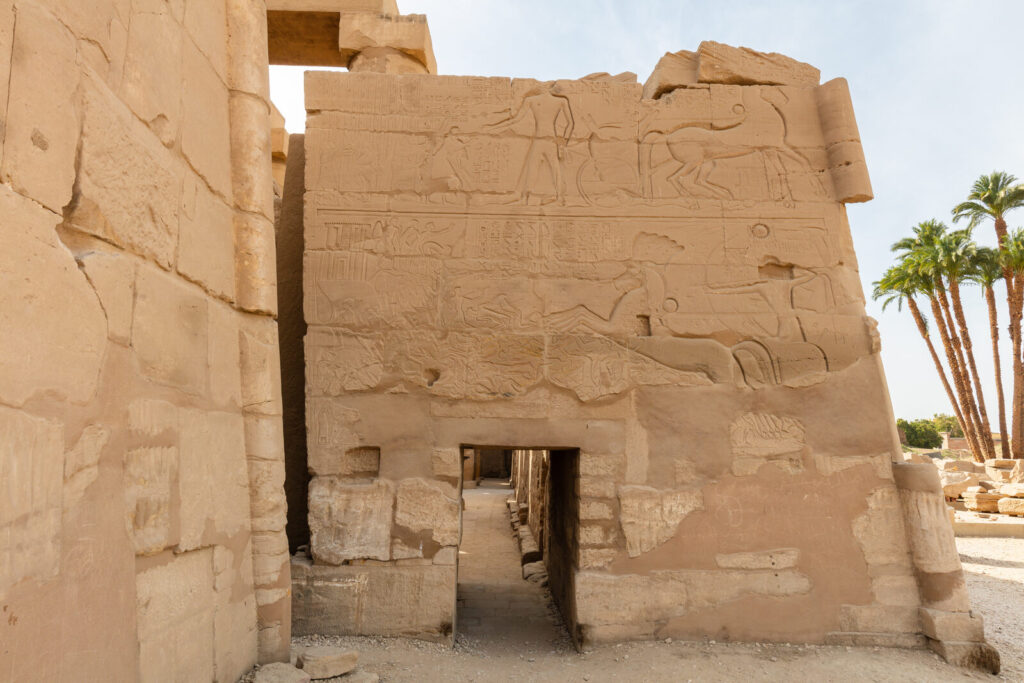
Luxor is the open-air heart of the trip. On the east bank, Karnak Temple’s hall of columns is one of the most photographed interiors in the country; nearby Luxor Temple lights up well in the evening. The west bank holds the Valley of the Kings and its painted royal tombs, plus the terraces of Hatshepsut’s temple. For cruise groups, Luxor is usually the embarkation or disembarkation point.
Aswan & Abu Simbel
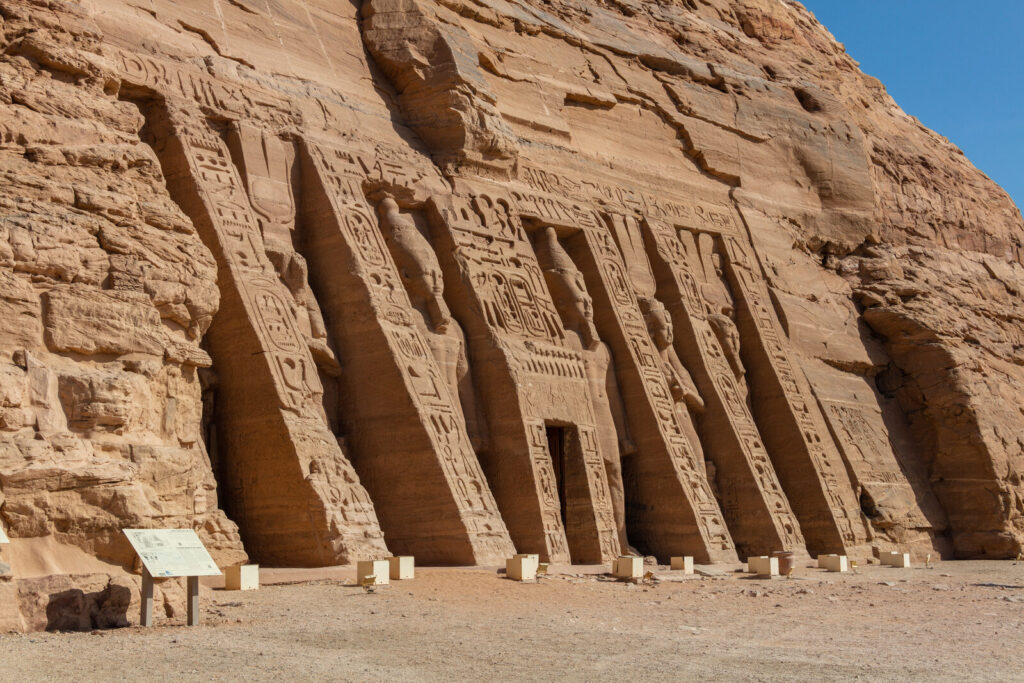
Aswan is calmer and more scenic: the island temple of Philae, the High Dam, and the granite quarries with the unfinished obelisk. From Aswan, most groups make the trip to Abu Simbel to see the colossal rock temples of Ramses II — either by an early road convoy or a short domestic flight. It’s a long out-and-back day but, for many travellers, the single most memorable stop.
Optional Red Sea (Hurghada)
For groups wanting to decompress after the temples, a few nights on the Red Sea at Hurghada add beach and snorkelling time. It pairs naturally with a land-based itinerary. Groups combining Egypt with the Gulf often pair it with a stopover handled through our Dubai DMC services.
Best time to visit
The comfortable window runs roughly October to April, when daytime temperatures are manageable for sightseeing and cruising. This is also peak season, so cruise cabins and the better hotels need to be held early for groups. Summer — May through September — brings extreme heat in the south around Luxor and Aswan, regularly into the 40s Celsius, which makes midday touring genuinely tough for older travellers. Summer departures are cheaper and quieter, and they can work with early starts and careful pacing, but we flag the heat clearly to agents before confirming.
Visas & entry
Many nationalities can enter Egypt on an electronic visa obtained online before travel, or a visa-on-arrival, while others require a visa in advance. Rules vary by passport and change periodically, so we don’t publish a blanket statement. Once we have the passport nationalities on a group manifest, we confirm the current requirement and the documentation needed for each traveller. Passports should generally have at least six months’ validity from the date of entry; we verify this per passport as part of the booking.
What an Egypt group tour costs
Egypt remains strong value for the experience delivered. The figures below are indicative land-cost ranges in USD, per person per day, twin-share, excluding international flights. They cover accommodation, meals as specified, guiding, transport, site entries and standard logistics. Actual quotes depend on group size, season, hotel category and inclusions.
| Tier | Cruise-based (USD pp/day) | Land-based (USD pp/day) |
|---|---|---|
| Standard (3–4★) | ~120–180 | ~110–170 |
| Deluxe (4–5★) | ~180–280 | ~190–300 |
| Premium / 5★ deluxe | ~280–450+ | ~320–550+ |
Domestic flights (Cairo–Luxor or Aswan–Cairo) and the Abu Simbel excursion are usually quoted as add-ons. Cruise pricing tends to look better at the standard and deluxe tiers because meals and inter-city transport are bundled into the sailing.
Sample 8-day Cairo–Nile cruise itinerary
A reliable structure we sell often, adaptable by group size and season:
Day 1 — Arrive Cairo. Airport meet-and-greet, transfer to hotel, welcome briefing.
Day 2 — Giza & Cairo. Pyramids and the Great Sphinx in the morning, the Grand Egyptian Museum after, with time for Old Cairo if pace allows.
Day 3 — Fly to Luxor, embark. Domestic flight, board the cruise, Karnak and Luxor temples in the afternoon.
Day 4 — Luxor west bank. Valley of the Kings and Hatshepsut’s temple, then sail south.
Day 5 — Edfu & Kom Ombo. River temples en route, sailing toward Aswan.
Day 6 — Aswan. Philae temple and the High Dam; optional early Abu Simbel excursion by flight or convoy.
Day 7 — Disembark, fly to Cairo. Free time or bazaar visit; farewell dinner.
Day 8 — Departure. Transfer to Cairo airport.
Practical tips for group leaders
- Abu Simbel means early starts. Road convoys and the first flights leave before dawn. Brief the group the night before and keep breakfast boxes ready.
- Beat the heat and the crowds. We front-load the big open sites — Giza, Karnak, the Valley of the Kings — into the early morning, especially in shoulder season.
- Tipping is part of the culture. Small gratuities (baksheesh) for drivers, guides, cruise crew and site staff are expected. We give groups a clear, pre-agreed tipping guide so individuals aren’t put on the spot.
- Security and convoys are normal. Some routes and excursions still run under escort or convoy timing. It’s routine; we build it into the schedule rather than treating it as a disruption.
- Dress respectfully at mosques. Covered shoulders and knees, and headscarves for women at certain religious sites. We remind groups in the pre-departure brief.
FAQ
Is a Nile cruise or a land tour better for older travellers?
Usually the cruise. Unpacking once and having the temples come to the boat removes the long road days and repeated hotel check-ins that tire older or mixed-mobility groups. Some sites still involve stairs and uneven ground, which we flag in advance.
How many days do we need for a proper Egypt group tour?
Seven to eight days covers Cairo plus a Luxor–Aswan cruise comfortably. Add two or three nights for a Red Sea extension, or trim to five or six for a Cairo-and-Luxor highlights run if time is tight.
What’s the ideal group size?
Most cruise and coach arrangements work well from around 10 up to 40 or more. Larger groups may split across cruise vessels or coaches; we quote and configure to the exact headcount.
Are domestic flights necessary?
They’re the practical way to move between Cairo and Upper Egypt. The Cairo–Luxor and Aswan–Cairo legs save a full day of road or overnight train each way, which is why we build them into most itineraries.
Is Egypt safe for groups right now?
The main tourist circuit is well established and heavily attended, with escort and convoy arrangements on certain routes. We monitor advisories and adjust routing where needed; we’ll always give an honest read at the time of booking.
Can we combine Egypt with another destination?
Yes. Egypt pairs naturally with a Gulf stopover; we coordinate the Dubai side through our Dubai DMC services so the whole multi-country program sits on one itinerary.
Planning an Egypt group departure? We handle hotels, Nile cruises, transfers, guides and site logistics end to end. See our Egypt DMC services or request a group quote.
Photos: the Great Sphinx of Giza by Petar Milošević (CC BY-SA 4.0); Karnak Temple, Luxor by Diego Delso (CC BY-SA 4.0), via Wikimedia Commons.

Travel DMC Group
Travel DMC Group is a B2B destination management company handling ground services — hotels, transfers, guided tours, MICE and group logistics — across Asia, the Middle East and the Caucasus. These guides are written by our in-house operations and product team from first-hand experience running group departures.
Recommended Posts
How Many Days Do You Need in Egypt? (2026 Guide)
June 22, 2026
Best Time to Visit Egypt: A Month-by-Month Guide (2026)
June 22, 2026