
Best Time to Visit Bhutan for Group Travel: A Season-by-Season Guide
The honest answer to “when is the best time to visit Bhutan” is that it depends on what your group wants to come home talking about — clear mountain views, a roaring festival, or low-season quiet. Bhutan packs all of that into a small Himalayan kingdom, but the experience swings hard with the calendar, and because every visitor must travel on a pre-arranged programme through a licensed operator, getting the timing right is something you decide up front, not on arrival.
We run group departures into Bhutan throughout the year, so here is how the seasons actually play out for travel agents planning 10 to 30 pax. If you are new to how Bhutan is sold to the trade, our explainer on what a DMC does sets the groundwork for why a ground handler sits at the centre of every Bhutan programme.
Spring (March to May): the all-rounder
Spring is the most popular window for group travel, and with good reason. Days are mild, rhododendrons and jacaranda are in bloom across the valleys, and the skies are usually clear enough for the high-Himalaya views your clients are paying for. It also carries Paro Tshechu, one of the country’s biggest festivals. The trade-off is that this is peak season — hotels in Paro and Thimphu fill early, so we lock group blocks well ahead.
Autumn (September to November): clear skies and big festivals
For many operators this is the sweet spot. The monsoon has cleared the air, mountain views are at their sharpest, and Thimphu Tshechu draws huge, colourful crowds. Like spring, it’s busy and priced accordingly. If your group’s priority is photography and festivals together, autumn is the one to sell.
Winter (December to February): cold, clear and quiet
Winter is underrated for groups. Daytime weather in the western valleys is crisp and often beautifully clear, crowds thin out, and rates ease. It’s cold at altitude and the highest passes can see snow, so we keep itineraries to the lower valleys and brief travellers to pack properly. For a calmer, better-value cultural tour, this works well.
Monsoon (June to August): green, wet and low-season
Rain mostly arrives as afternoon showers rather than all-day washouts, and the valleys turn vivid green. Views are less reliable and some roads are slower, but prices are at their lowest and sites are uncrowded. We’re upfront with clients that this is a trade of guaranteed scenery for value and solitude.
Where to take a group in Bhutan
Almost every first-time group programme stays in the western valleys, which is where the flights land and where the roads are easiest for a coach. These are the anchors we build itineraries around:
- Paro — the arrival valley and home to the country’s only international airport. It’s a gentle place to acclimatise and the base for the Tiger’s Nest hike.
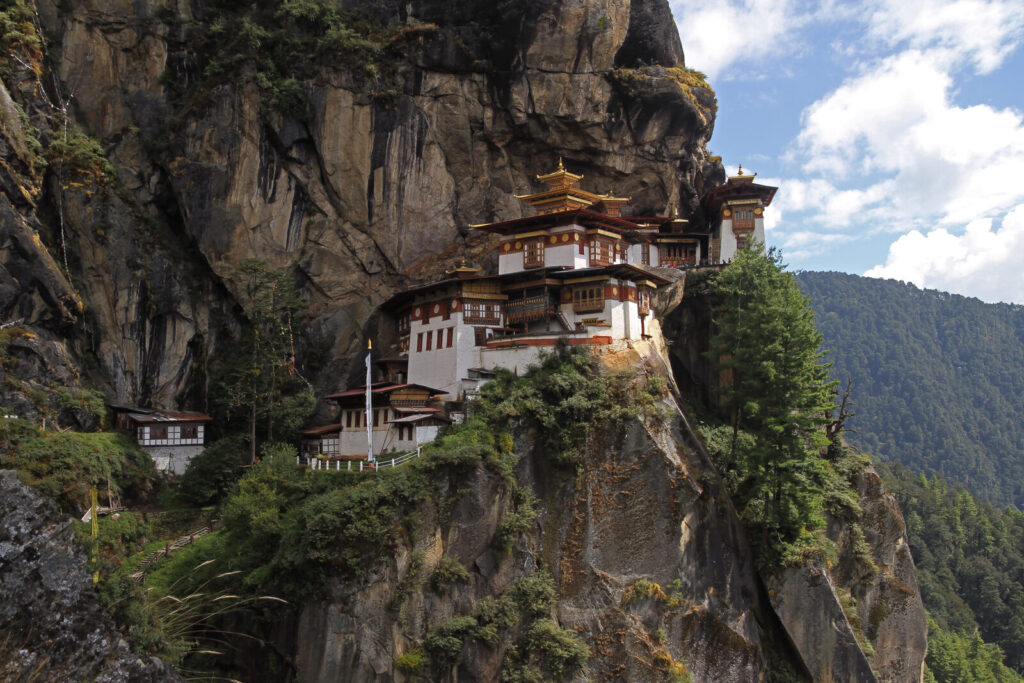
- Tiger’s Nest (Paro Taktsang) — the monastery clinging to a cliff above Paro and the trip’s signature image. The round-trip walk is a moderate climb of roughly two to three hours up; we offer ponies for the first stretch to keep mixed-ability groups together.
- Thimphu — the capital, and the cultural core of any tour: the giant Buddha Dordenma statue, the weekend market, the textile and folk-heritage museums, and the dzong. It’s also where free time and shopping work best for a group.
- Dochula Pass — the 3,100-metre pass between Thimphu and Punakha, marked by 108 chortens and, on a clear morning, a line of eastern Himalayan peaks. A short photo and tea stop that breaks up the drive.
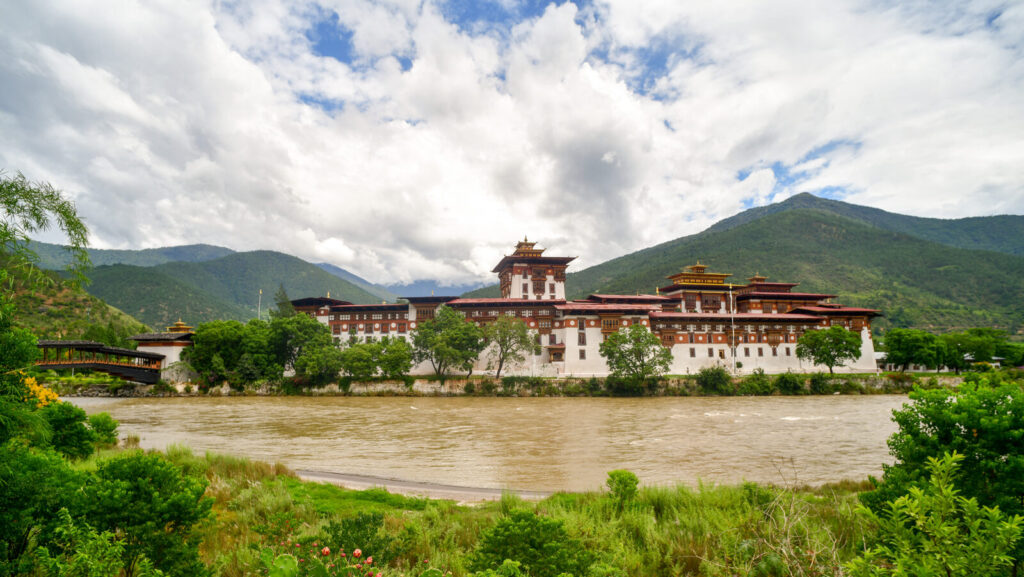
- Punakha Dzong — arguably the most photogenic fortress-monastery in the country, set where two rivers meet. The valley is lower and warmer than Thimphu, which makes it a comfortable overnight.
- Phobjikha / Gangtey valley — a wide glacial valley and winter home of the black-necked cranes (roughly late October to February). It adds a quieter, scenic night for groups with an extra day to spare.
Festivals: timing the tshechus
The tshechus are masked religious dance festivals held at dzongs and monasteries across the country, and for many groups they are the whole reason for the trip. The two that matter most for the trade are Paro Tshechu in spring and Thimphu Tshechu in autumn, both of which draw large, photogenic crowds in full traditional dress. The catch is the calendar: tshechus follow the Bhutanese lunar calendar, so their Gregorian dates shift every year and don’t fall on the same week twice. Smaller regional festivals run almost year-round, which means with enough notice we can often time a departure to catch one. If a festival is the anchor of your tour, confirm the exact dates with us before you publish or market the departure — and book early, because festival weeks are the first to sell out in Paro and Thimphu.
Indicative costs
Bhutan is a higher-value destination than most of South Asia, and the structure matters when you quote. Land costs cover hotels, guide, transport, meals and sightseeing. On top of that sits the Sustainable Development Fee (SDF), a per-person, per-night charge levied by the government that is separate from the land package — we always show it as its own line so your client sees exactly where the money goes. The ranges below are indicative per-person, per-day land costs for a group; they exclude international flights, the SDF, and any single-room supplements, and they move with season, group size and room category.
| Hotel tier | Indicative USD / person / day |
|---|---|
| Standard 3-star | USD 120–180 |
| Comfort 4-star / boutique | USD 180–280 |
| Premium / luxury lodge | USD 350–700+ |
Larger groups lower the per-head land cost because vehicles and guides are shared; the SDF, by contrast, is fixed per person and doesn’t scale with group size, so factor it separately when you build your selling price. Send us your pax count, dates and target tier and we’ll return a firm quote with the SDF broken out.
A sample 5–7 night western-valleys itinerary
This is the route we run most often for first-time groups. It stays in the lower western valleys, which keeps it coach-friendly and works in every season including winter.
- Day 1 — Arrive Paro. Fly into Paro, transfer to the hotel and keep the afternoon light: a riverside walk and the Rinpung Dzong. An easy first day to settle the group at altitude.
- Day 2 — Paro to Thimphu. Short drive to the capital. Buddha Dordenma, the National Memorial Chorten and the weekend market if the days line up.
- Day 3 — Thimphu. Folk-heritage and textile museums, the dzong, and time for shopping and free wandering — the part of the trip groups always ask for.
- Day 4 — Thimphu to Punakha via Dochula Pass. Photo and tea stop at the 108 chortens, then descend to the warmer Punakha valley and visit Punakha Dzong at the river confluence.
- Day 5 — Punakha to Paro. A gentle valley walk in the morning, then the drive back to Paro to rest ahead of the hike.
- Day 6 — Tiger’s Nest. The Taktsang climb, the trip’s highlight, with ponies available for the first stretch and a clear turn-around point for anyone who’d rather not go the full way.
- Day 7 — Depart Paro. Morning flight out, or add a Phobjikha / Gangtey night earlier in the trip to stretch it to a fuller week.
Practical tips for group leaders
- Pace the altitude. Paro and Thimphu sit around 2,300 metres and Dochula Pass reaches 3,100. It’s not extreme, but we keep day one light, build in hydration stops and flag the Tiger’s Nest climb as a moderate effort so no one is caught out.
- Pack for cold mornings year-round. Even in spring and autumn, dawn and dusk at altitude are cold; winter needs proper layers, gloves and a hat. Dzongs and monasteries also require covered shoulders and knees, so brief the group on modest dress.
- A licensed operator and guide are mandatory by law. Independent, unguided travel isn’t permitted. A licensed Bhutanese operator and a guide accompany the group throughout — this isn’t an upsell, it’s how the country admits visitors.
- Manage connectivity expectations. Wi-Fi exists in hotels but can be slow, and mobile coverage thins out on mountain drives. We tell groups to treat it as a part-time digital detox and download maps and music before they fly.
- Confirm entry rules per passport. Visa and SDF arrangements vary by nationality, and we confirm the rule for each passport in the group before we file, so there are no surprises at the airport.
What every group needs to know before booking
- You must travel through a licensed operator. Independent, unguided travel isn’t permitted, so a Bhutan DMC handling your visa, guide, transport and hotels isn’t optional — it’s how the country works.
- The Sustainable Development Fee. Bhutan levies an SDF per person per night on top of land costs. We build this into every quote so there are no surprises for your client.
- Festival dates move. Tshechus follow the lunar calendar, so they shift each year. If a festival is the reason for the trip, confirm the exact dates with us before you market the departure.
- Altitude is real. Paro and Thimphu sit around 2,300 metres. We pace the first day gently and flag the Tiger’s Nest hike as a moderate climb so groups arrive prepared.
Groups pairing Bhutan with the wider Himalaya often run it alongside our Nepal DMC programme via the short Kathmandu–Paro flight.
Frequently asked questions
What is the cheapest time to visit Bhutan?
The monsoon (June to August) and deep winter (December to February) carry the lowest land rates and the thinnest crowds, in exchange for less reliable mountain views.
Do groups need to book through an operator?
Yes. Bhutan requires visitors to travel on a planned itinerary arranged by a licensed operator, with a guide throughout — we handle the visa and the full ground programme.
How many days do you need in Bhutan?
A satisfying first-time group tour of the western valleys runs 5 to 7 nights, which comfortably covers Paro, Thimphu, Punakha and the Tiger’s Nest hike.
When are Bhutan’s main festivals?
The two biggest for the trade are Paro Tshechu in spring and Thimphu Tshechu in autumn. Because they follow the lunar calendar the exact dates shift each year, so confirm them with us before you set a departure around one.
Is the Tiger’s Nest hike suitable for a mixed-ability group?
For most reasonably mobile travellers, yes — it’s a moderate two to three hour climb up. Ponies cover the lower section, and there are natural turn-around points such as the cafeteria viewpoint for anyone who prefers not to go all the way, so the group can split comfortably.
What does the Sustainable Development Fee cover, and is it included in your quote?
The SDF is a government charge levied per person, per night that funds conservation and free public services in Bhutan. It sits on top of land costs, and we always show it as a separate line in our quote so your client sees exactly what they’re paying.
Planning a Bhutan group departure? We handle the visa, SDF, guides, transport and festival timing end to end. Explore our Bhutan DMC services or request a group quote with your dates and pax.
Photos: Paro Taktsang by Gerd Eichmann (CC BY-SA 4.0); Punakha Dzong by Christopher J. Fynn (CC BY-SA 4.0), via Wikimedia Commons.

Travel DMC Group
Travel DMC Group is a B2B destination management company handling ground services — hotels, transfers, guided tours, MICE and group logistics — across Asia, the Middle East and the Caucasus. These guides are written by our in-house operations and product team from first-hand experience running group departures.