

GCC Grand Tours Visa 2026: A Tour Operator’s Guide to the Unified Gulf Visa
For years, the single biggest friction in selling a multi-country Gulf itinerary has been the visa. A group that wants Dubai, Abu Dhabi, Doha and Muscat on one trip currently needs a separate authorisation for each sovereign state — different portals, different fees, different lead times, and a real risk that one slow approval holds up the whole departure. The GCC’s planned Grand Tours Visa — a single tourist visa valid across all six Gulf states — is designed to remove exactly that friction. It is the most significant change to Gulf group travel in a decade, and it is close, but not here yet. Here is the operator’s version: what it is, where it actually stands in mid-2026, and what to do about it now.
What the GCC Grand Tours Visa actually is
The GCC Grand Tours Visa (also referred to as the GCC Unified Tourist Visa) is a single tourist permit that will let a traveller move freely among all six Gulf Cooperation Council member states on one authorisation: the United Arab Emirates, Saudi Arabia, Qatar, Oman, Kuwait and Bahrain. The model is openly compared to Europe’s Schengen area — one visa, one application, free movement across borders that today each require their own paperwork. For a tour operator, that is the headline: a genuine multi-country Gulf circuit on a single document, instead of stitching together four or five separate visas.
The intent is a unified online portal where a traveller applies once and chooses between a single-country permit or a multi-country “Grand Tour” permit covering the whole bloc. If you are new to where visa support sits between you and a ground operator, our explainer on what a DMC does covers how permits, documentation and logistics hand off on a group booking.
The six countries — and why one visa changes the math
Today, a Gulf circuit is priced and planned around the weakest visa link. Each of the six states runs its own system: the UAE and Saudi Arabia have mature e-visa and visa-on-arrival regimes for many nationalities; Qatar, Oman, Bahrain and Kuwait each have their own rules, portals and fees. Build a Dubai–Doha–Muscat programme for a mixed-nationality group and you are managing three immigration processes in parallel, each with its own approval window, and quoting visa costs three times over.
A single permit collapses that into one application and one fee. The practical effect is not just cheaper — it is that itineraries which were previously too administratively heavy to sell become realistic. A week that combines the UAE’s modern attractions, Saudi Arabia’s heritage sites, and Qatar’s compact culture-and-sport offering stops being a visa headache and becomes a single bookable product. Operators running our Dubai DMC, Abu Dhabi DMC and Saudi Arabia DMC services already twin these destinations; the unified visa is what makes three- and four-country versions clean to operate.
Where it stands right now (mid-2026)
This is the part agents most need to get right, because the visa is announced but not yet operational. As things stand in mid-2026:
- A pilot is scheduled for Q4 2026. The UAE Minister of Economy confirmed in January 2026 that the unified visa would launch as a pilot in the final quarter of the year, after earlier target dates slipped.
- The pilot begins narrow — a single UAE–Bahrain air corridor. Rather than switching on all six countries at once, the rollout starts by testing real-time data-sharing between two immigration systems, with QR-code validation at smart gates and biometric processing at Dubai International Airport.
- Full six-country rollout follows the pilot — realistically late 2026 into 2027, dependent on the pilot proving out.
- The delay is technical, not political. The hold-up has been integrating immigration databases and aligning security-screening protocols across six sovereign states — which is also why a phased, corridor-by-corridor launch makes sense.
- Official pricing has not been published. Figures circulating in the trade press are reported estimates, not confirmed government rates. Do not quote a unified-visa fee to a client as fixed.
The honest read for planning purposes: treat the unified visa as a 2027 product for confirmed group departures, and watch the UAE–Bahrain corridor pilot as the signal that the full system is close.
What it means for group itineraries
Once the visa is live, the obvious win is the multi-country Gulf circuit that today is hard to assemble. A framing we expect to quote often:
- Days 1–3 — UAE (Dubai & Abu Dhabi). Arrival into Dubai, city and desert programme, then the Sheikh Zayed Grand Mosque and cultural district in Abu Dhabi.
- Days 4–5 — Qatar (Doha). Short hop to Doha for the Museum of Islamic Art, Souq Waqif and the Corniche — a compact, high-impact two days.
- Days 6–7 — Oman (Muscat). A change of pace: the Grand Mosque, Mutrah Souq and the coast, for the heritage-and-nature contrast that balances the big-city days.
- Optional extension — Saudi Arabia (AlUla) or Bahrain (Manama). AlUla and Hegra for heritage-led groups; Manama for a relaxed, walkable add-on.
The same logic applies to MICE and incentive movements, where a single visa removes one of the biggest administrative obstacles to running an incentive across two or three Gulf cities — see our overview of incentive destinations across Asia and the Middle East.
What we’re telling agents to do before launch
Until the visa is operational, the multi-visa reality still applies. Our standing advice to operators planning Gulf groups this year:
- Keep quoting on current per-country visas for any 2026 departure. Do not promise the unified visa for trips before the full rollout is confirmed.
- Design itineraries that will benefit. If you are building a Gulf product now, structure it so it can flip to a single-visa multi-country programme the moment the system is live — the routing and ground arrangements don’t change, only the paperwork does.
- Check nationality eligibility early. The unified visa is expected to follow the existing e-visa / visa-on-arrival eligibility logic, so mixed-nationality groups will still need per-passport checks. We screen every passport on a group before confirming.
- Watch the corridor pilot. The UAE–Bahrain air corridor going live is the practical milestone that tells you the full bloc is weeks, not months, away.
Indicative costs — with a clear caveat
Because no GCC government has published official pricing, any figure you see is an estimate. The reported ranges circulating in the trade are below, expressed in UAE dirhams — useful only for rough budgeting, not for client quotes:
| Permit type (reported, unofficial) | Indicative fee | Indicative validity |
|---|---|---|
| Single-country permit | ~AED 330–380 | ~30 days |
| Multi-country “Grand Tour” permit | ~AED 400–480 | ~60–90 days |
The strategic point is not the exact fee — it is that a multi-country permit priced barely above a single-country one would make the whole bloc dramatically cheaper to sell as one trip than it is today. We will quote firm figures the moment official rates are published.
Frequently asked questions
Is the GCC Grand Tours Visa available now?
No. As of mid-2026 it is announced but not operational. A pilot is scheduled for the final quarter of 2026, starting with a single UAE–Bahrain air corridor, with the full six-country rollout to follow.
Which countries does it cover?
All six GCC states: the United Arab Emirates, Saudi Arabia, Qatar, Oman, Kuwait and Bahrain.
How much will it cost?
Official pricing has not been published. Reported estimates suggest a single-country permit around AED 330–380 and a multi-country “Grand Tour” permit around AED 400–480, but these are not confirmed and should not be quoted to clients as fixed.
Can I book multi-country Gulf groups for 2026 on this visa?
Not safely. For 2026 departures, plan on the current per-country visa regime. Treat the unified visa as a 2027 product until the full rollout is confirmed.
Will every nationality qualify?
Eligibility is expected to track the existing e-visa and visa-on-arrival rules, so mixed-nationality groups will still need per-passport checks. We screen each traveller before confirming a departure.
Planning a Gulf circuit? Talk to us
We handle group ground arrangements across the UAE, Saudi Arabia and the wider Gulf, and we are tracking the unified-visa rollout closely so your itineraries are ready to flip to a single permit the day it goes live. Whether you are quoting a 2026 departure on current visas or designing a multi-country circuit for 2027, our Dubai, Abu Dhabi and Saudi Arabia teams can build and cost it for you. Get in touch with your dates, pax and routing for a net quote.
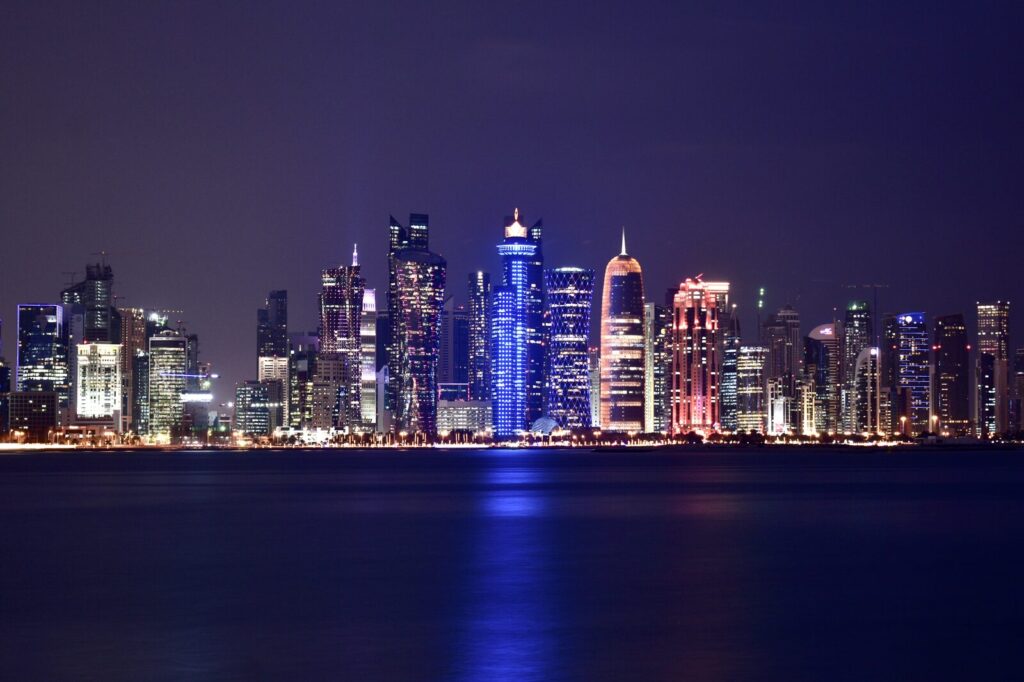
Hero image: Doha, Qatar — Thameur Belghith, CC BY-SA 4.0, via Wikimedia Commons. This article reflects publicly reported information as of mid-2026; visa rules, dates and fees are subject to change by GCC authorities.

Travel DMC Group
Travel DMC Group is a B2B destination management company handling ground services — hotels, transfers, guided tours, MICE and group logistics — across Asia, the Middle East and the Caucasus. These guides are written by our in-house operations and product team from first-hand experience running group departures.
Recommended Posts

What Is SIC in Travel? SIC Full Form, Meaning and How SIC Transfers Work
September 9, 2026


MICE & DMC Glossary: 25 Travel-Trade Terms Explained
June 22, 2026