
Georgia vs Azerbaijan for Group Tours: An Operator’s Comparison
Agents building Caucasus programmes ask us the same thing constantly: Georgia or Azerbaijan? Both are excellent, both are well-priced, and the easy answer is “combine them” — Tbilisi and Baku sit a short flight or an overnight train apart. But if a group only has time for one, the two countries reward different priorities. This is how we compare them for group travel, with the detail you need to brief a client and build a costed itinerary. If you are new to working through a ground operator, our short primer on what a DMC does explains where we fit.
The quick verdict
Choose Georgia for landscape, wine and an easygoing, walkable charm. Choose Azerbaijan for a sleek capital, the Caspian and a more curated, modern feel. Most first-time Caucasus groups lean Georgia; repeat and incentive groups often prefer Baku. Neither is a one-note destination — both carry a full week comfortably — but the centre of gravity is different, and that is what should drive the choice.
Georgia vs Azerbaijan at a glance
The table below is the version we usually put in front of an agent first. Treat the cost levels as indicative ranges only; the real number depends on hotel tier, group size and season, and we quote against your specific brief.
| Georgia | Azerbaijan | |
|---|---|---|
| Visa / entry | Visa-free for many nationalities for up to a year; among the most frictionless entries for mixed groups. We confirm the rule for each passport. | ASAN online e-visa for most visitors — simple but a pre-travel step to manage. We confirm the rule for each passport. |
| Scenery | Big mountain drama — the Greater Caucasus, cave towns and green wine valleys, much of it within day-trip reach of Tbilisi. | Urban-led with a striking Caspian coastline; semi-desert petroglyph country and mud volcanoes near the capital, mountains at Gabala. |
| Food & wine | A genuine culinary destination — the supra feast and roughly 8,000 years of winemaking in Kakheti. | Excellent cuisine (plov, kebabs, Caspian fish); sells more on architecture and contrast than on wine. |
| Best for | First-timers, culinary groups, nature and active itineraries, easy walking tours. | Incentives, “wow factor” city breaks, repeat Caucasus travellers, polished short programmes. |
| Typical cost level | Strong value vs Western Europe; food and wine often edge cheaper. | Strong value overall, but premium Baku city hotels can run higher. |
| Getting around | More regional driving between Tbilisi, Kakheti and Kazbegi; coach-friendly but longer transfer days. | Concentrated around Baku, so transfers stay short; the Gabala extension is the main long drive. |
Visas and entry
This is where the two differ most, and for groups it matters. Georgia is visa-free for a large number of nationalities for up to a year — about as frictionless as group travel gets. Azerbaijan uses the ASAN e-visa for most visitors, which is straightforward online but still a step to manage and budget time for before departure. For a mixed-nationality group on a tight timeline, Georgia’s open entry is a genuine advantage. We never assume; we confirm the rule for each passport on your manifest before you commit dates.
Highlights of Georgia
Georgia is the more dramatic of the two for nature, and most of its headline sights are within day-trip reach of Tbilisi, which keeps a programme efficient.
Tbilisi Old Town and the sulphur baths
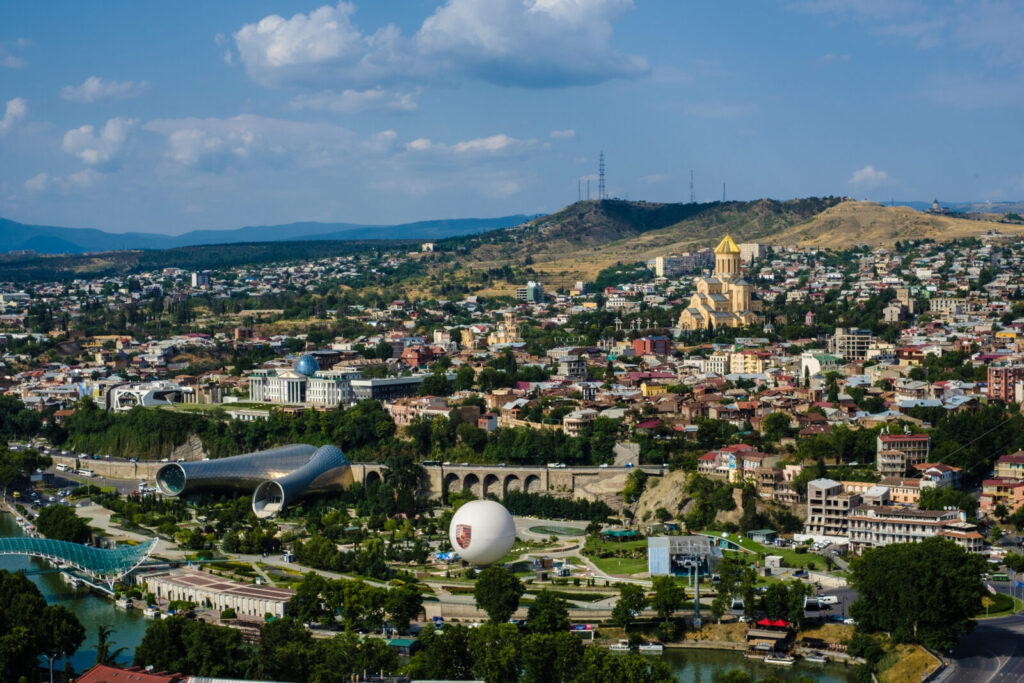
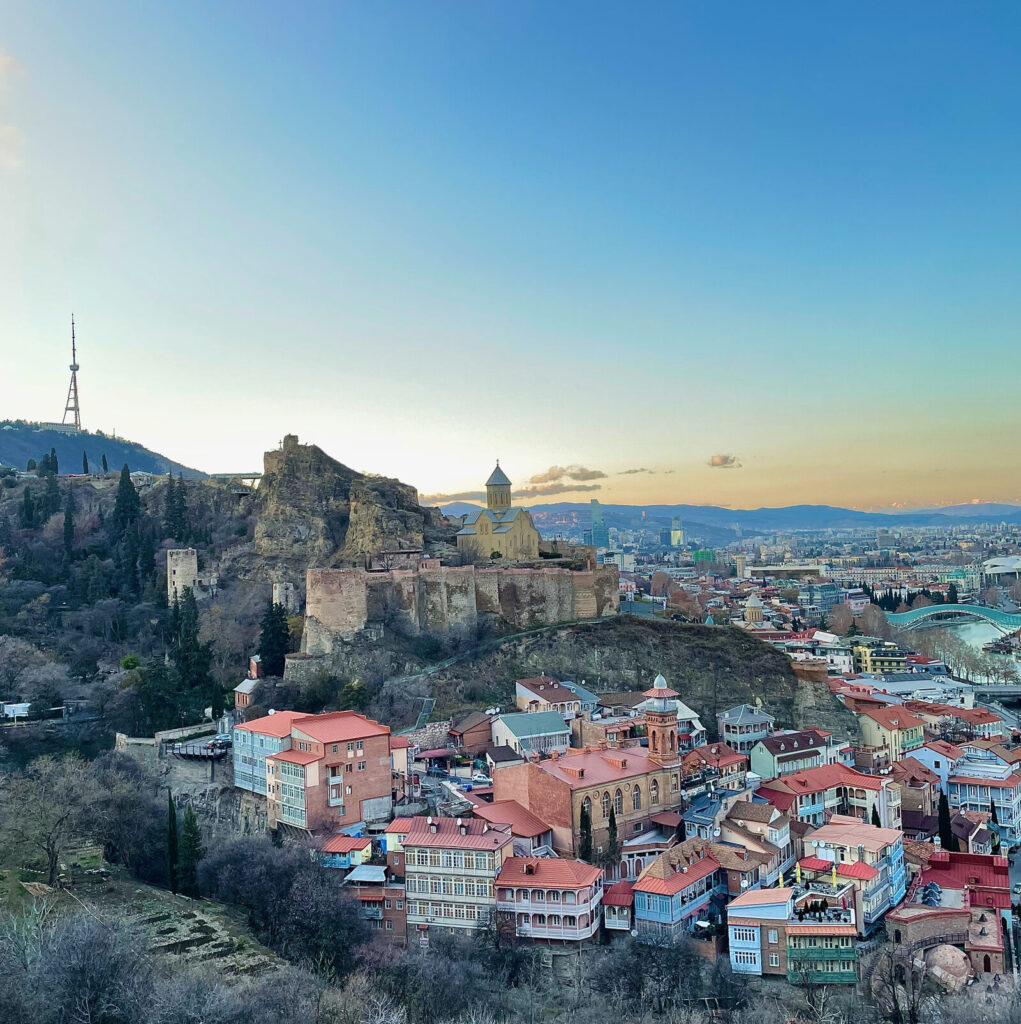
The capital’s old quarter is compact, walkable and photogenic — cobbled lanes, wooden balconies and the Abanotubani district of domed sulphur bathhouses fed by hot springs. It is an easy half-day on foot and a strong opener for any group, with the funicular up to Mtatsminda and the Narikala fortress for the panoramic shot.
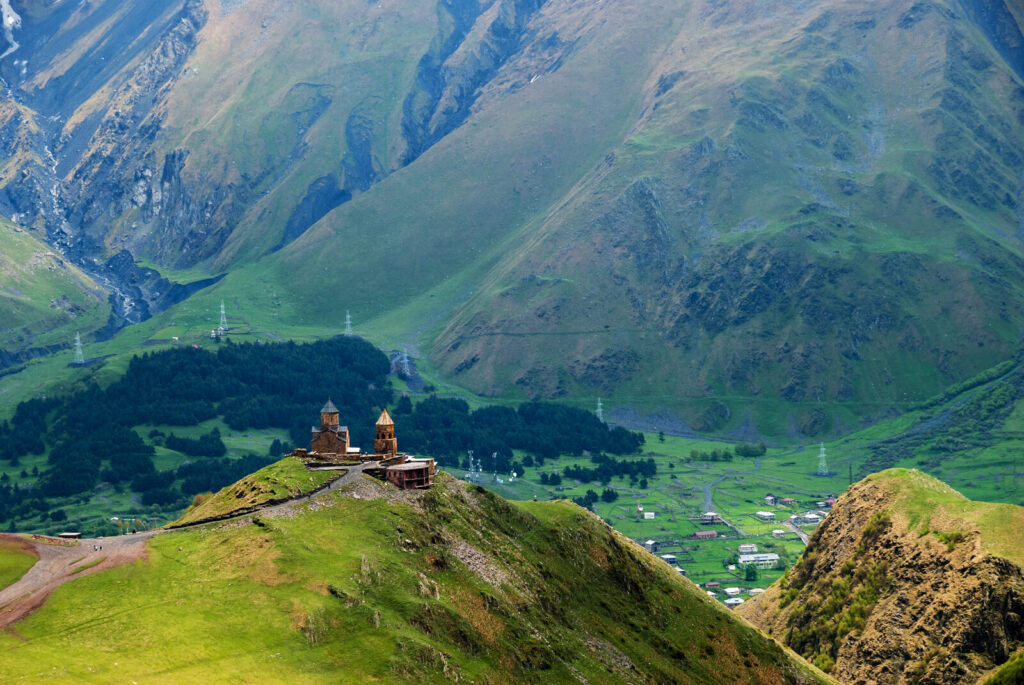
Kazbegi and Gergeti Trinity Church
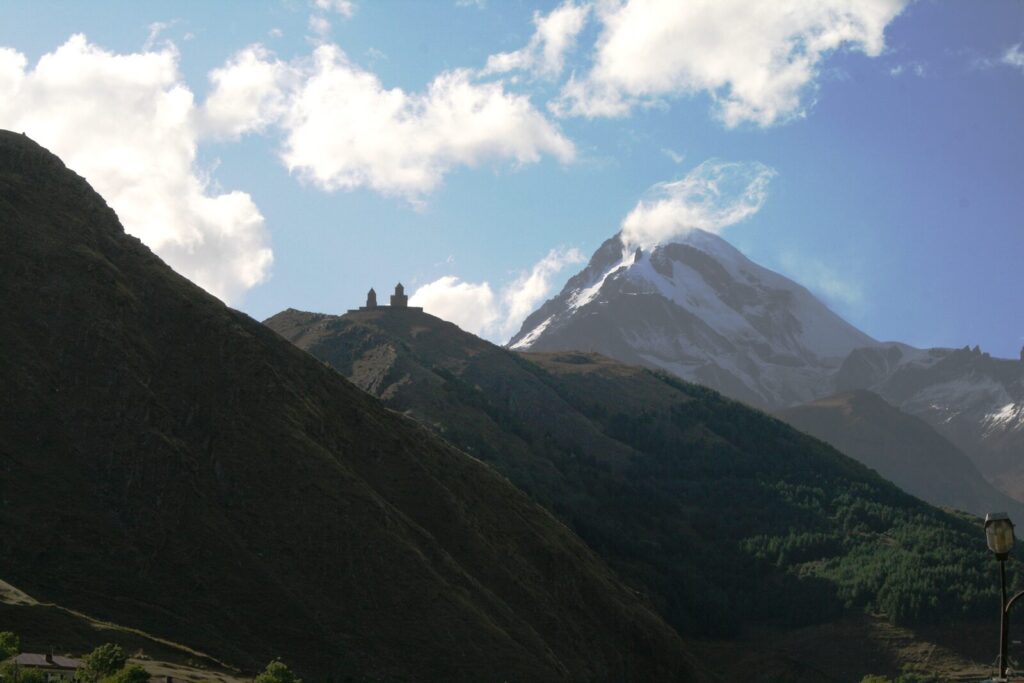
A day trip north along the Georgian Military Highway brings groups to Stepantsminda (Kazbegi), where the Gergeti Trinity Church stands against Mount Kazbek — one of the most-photographed scenes in the country. The road is scenic but long, so we usually build it as a full day with a comfortable coach and a guide who paces the stops.
Kakheti wine region
Georgia’s eastern wine country is the cultural core for many groups. Kakheti’s cellars still make wine in buried clay qvevri, and a supra lunch with a winemaker is the kind of experience that sells a tour on its own. Sighnaghi, the walled hilltop town above the Alazani Valley, is an easy add.
Uplistsikhe cave town and Mtskheta
West of Tbilisi, the rock-hewn settlement of Uplistsikhe predates Christianity in the region and pairs naturally with Mtskheta, Georgia’s ancient spiritual capital and a UNESCO site with the Svetitskhoveli Cathedral and the hilltop Jvari Monastery. Together they make a single rewarding day that balances the wine and mountain days.
Highlights of Azerbaijan
Azerbaijan is more compact and city-led, which makes it efficient to operate: a Baku base covers most of the country’s signature sights with short transfers.
Baku Old City (Icherisheher)
The walled Old City is a UNESCO site and the heart of any Baku programme — the Maiden Tower, the Palace of the Shirvanshahs and a maze of lanes that read as medieval against the modern skyline beyond. It is walkable and works well as a guided morning.
The Flame Towers and Caspian waterfront
The three Flame Towers are Baku’s signature silhouette, especially when they light up after dark. Below them, the Caspian-side boulevard gives groups a long, flat waterfront promenade for an evening stroll, with the Heydar Aliyev Center’s flowing architecture a short drive away for design-minded clients.
Gobustan petroglyphs and mud volcanoes
About an hour from the city, the Gobustan rock art — thousands of prehistoric carvings, a UNESCO site — sits near a field of bubbling mud volcanoes. It is an unusual, memorable half- to full-day excursion that contrasts sharply with the polished capital and photographs well for marketing.
Gabala and the mountains
For groups wanting greenery and altitude, Gabala in the northern foothills is the usual extension — cable cars, forests and a cooler climate. It is the one longer drive in an otherwise tight itinerary, so we build it as an overnight rather than a same-day return when the schedule allows.
A combined 8–10 day Tbilisi + Baku itinerary
When a group has the time, running both countries in one loop is the strongest value of all — and the two capitals are linked by short direct flights and an overnight train, so the join is easy. The outline below is the framework we cost most often; we tighten or extend it to the group’s pace and budget.
- Day 1 — Tbilisi. Arrival, evening Old Town walk, welcome dinner.
- Day 2 — Tbilisi & Mtskheta. City touring, sulphur-bath district, day excursion to Mtskheta and Jvari.
- Day 3 — Kazbegi. Full-day Military Highway drive to Gergeti Trinity Church and the high Caucasus.
- Day 4 — Kakheti. Wine region, qvevri cellar visit and supra lunch, Sighnaghi.
- Day 5 — Uplistsikhe, then transfer. Cave town in the morning; short flight or overnight train Tbilisi to Baku.
- Day 6 — Baku. Old City (Icherisheher), Maiden Tower, Flame Towers by night.
- Day 7 — Gobustan. Petroglyphs and mud volcanoes; Caspian waterfront in the evening.
- Day 8 — Gabala or Baku at leisure. Mountain extension, or design and shopping in the capital.
- Days 9–10 — Buffer / departure. A spare day for incentive add-ons, a second wine experience, or a relaxed exit.
Run in reverse just as well — many groups prefer to finish in Tbilisi for the wine. We coordinate both ends, including the cross-border transfer, so the agent manages one point of contact rather than two operators.
Food, wine and atmosphere
Georgia is a genuine food-and-wine destination — the supra feast and roughly 8,000 years of winemaking are reason enough to visit, and Kakheti’s cellars are a highlight for many groups. Azerbaijan’s cuisine is excellent too, with plov, kebabs and Caspian fish at its centre, but the country sells more on architecture and contrast: medieval walls beside futuristic towers. For a culinary-led group, Georgia usually wins; for a “wow factor” incentive, Baku does.
Seasonality and indicative cost
May–June and September–October are ideal for both countries, with comfortable temperatures for city touring and mountain excursions, and the mountain roads reliably open. July and August are hot, especially in Baku and the lowlands, though the Georgian highlands stay pleasant. Winter is quiet and cheaper but limits the Kazbegi and Gabala mountain legs, so we steer most group programmes to the two shoulder windows.
On cost, both destinations offer strong value against Western Europe. As a planning guide only, a well-run group tour here typically lands well below a comparable Western-European itinerary of the same length and hotel tier; Georgia can edge cheaper on food and wine, while premium Baku city hotels can lift the Azerbaijan number. We quote real, current figures against your group size, season and chosen hotels rather than headline averages.
Cost and logistics
The operational shape differs even where value is similar. Georgia’s attractions are spread across regions, so itineraries involve more driving between Tbilisi, Kakheti and Kazbegi — coach-friendly, but plan for longer transfer days. Azerbaijan concentrates around Baku, which keeps transfers short and the day plan tight. Whichever you choose, our Georgia DMC and Azerbaijan DMC teams handle hotels, transport, guides and the cross-border logistics if you run both in one trip.
Practical tips for operators
- Visas. Georgia is visa-free for many nationalities for up to a year; Azerbaijan runs the ASAN e-visa online for most visitors. Build the e-visa step into the pre-departure timeline, and let us confirm the rule for each passport on the manifest before you publish dates.
- Money. Georgia uses the lari, Azerbaijan the manat. Cards are widely accepted in cities; carry some cash for rural Kakheti cellars, Gobustan and small vendors. ATMs are easy to find in both capitals.
- Connectivity. Mobile coverage is good in and around both capitals; local SIMs and eSIMs are cheap and worth recommending for free-time groups. Coverage thins on the high Kazbegi road, so brief drivers and guides accordingly.
- Transfers. Book the Tbilisi–Baku flight or overnight train early in peak shoulder season, as group blocks fill. We hold both options when planning a combined loop.
- Guiding. Quality English-speaking guides are available in both countries; specialist wine and architecture guides are worth requesting in advance for themed groups.
Frequently asked questions
Can you combine Georgia and Azerbaijan in one tour?
Yes, and many groups do. Tbilisi and Baku are linked by short flights and an overnight train; a combined 8–10 day loop works well. We coordinate both ends, including the cross-border transfer.
Which is cheaper, Georgia or Azerbaijan?
They are broadly similar and both excellent value against Western Europe. Georgia can edge cheaper on food and wine; Azerbaijan’s premium city hotels can run higher. We quote the real numbers for your chosen route, season and hotel tier.
When is the best time to visit the Caucasus?
May–June and September–October are ideal for both countries, with comfortable temperatures for city touring and mountain excursions. Summer is hot in the lowlands and Baku; winter limits the mountain legs.
Do travellers need a visa for either country?
Georgia is visa-free for many nationalities for up to a year, while Azerbaijan uses the ASAN e-visa online for most visitors. Requirements vary by passport, so we confirm the rule for each nationality on your group before you commit.
How many days do I need for each country?
Four to five days suits a single-country programme that covers the headline sights without rushing. For both countries in one trip, plan eight to ten days to keep the pace comfortable and absorb the transfer day.
Is the Caucasus suitable for first-time groups?
Very. Georgia in particular is an easy first Caucasus destination — open entry, walkable cities and short learning curve for clients. Azerbaijan adds a polished city contrast and works well as a second visit or as the “wow” half of a combined loop.
Building a Caucasus programme? Whether you run one country or both, we handle hotels, transport, guides and cross-border logistics. Explore our Georgia DMC and Azerbaijan DMC services, or request a group quote.
Photos: Tbilisi old town by LeontinaVarlamonva (CC0); Gergeti Trinity Church by Nata Mostova (public domain), via Wikimedia Commons.

Travel DMC Group
Travel DMC Group is a B2B destination management company handling ground services — hotels, transfers, guided tours, MICE and group logistics — across Asia, the Middle East and the Caucasus. These guides are written by our in-house operations and product team from first-hand experience running group departures.