
Planning a Nepal Group Tour: Culture, the Himalayas & Logistics
Few destinations give a group as much variety per day as Nepal. In the morning a coach can be parked outside a 15th-century temple complex; by afternoon the same group is watching the Annapurna range turn gold across a lake; the next day they are tracking rhino from a jeep in lowland jungle. That range is exactly why a well-built Nepal group tour works for travel agents and tour operators handling departures of 15 to 40 passengers — it appeals to first-timers and repeat Himalaya travellers alike, and it does not require everyone to lace up trekking boots.
Our team runs Nepal as a ground operator, and the point we make to every agent partner is this: Nepal is not only a trekking country. The classic Kathmandu–Pokhara–Chitwan loop is a culture, scenery and wildlife circuit that keeps a mixed-age group engaged without a single uphill day. Trekking is an add-on for groups that want it, not the spine of the trip. Below is how we plan these departures, from season and route to costs and the logistics that quietly decide whether a group runs smoothly.
Why run a Nepal group tour through a DMC
Nepal rewards local handling more than most destinations. The road network in the hills is slow and weather-sensitive, domestic flights to and from the mountain airstrips are routinely delayed by cloud, and the best guides and the better hotel allocations are spoken for early in peak season. An agent booking from abroad, piece by piece, carries all of that risk alone.
As the on-the-ground operator we hold the contracts, the coaches, the licensed guides and the contingency plans. When a Pokhara flight is grounded by morning fog, our team reroutes the group by road or reshuffles the day rather than leaving a group leader stranded with no Plan B. We handle permits, park entry, hotel blocks and inter-city transfers as one coordinated movement, and you keep a single point of contact. Our explainer on what a DMC actually does sets out the division of labour: you own the client relationship and the selling, we own the moving parts inside Nepal.
Best time to run a Nepal group tour
Season selection is the single biggest driver of how a group experiences Nepal, because mountain visibility and road conditions swing hard across the year.
October–November is the peak window and the one we recommend by default. Post-monsoon air is clean, the mountains are out most mornings, and temperatures in Kathmandu and Pokhara are comfortable. It is also the busiest period, so we ask agents to confirm group dates and rooming early — hotel space and guides in this window go quickly.
March–April is the spring alternative. Days are warm, rhododendron is in bloom at altitude, and the valley and Pokhara are pleasant. Haze can build through the afternoons later in spring, so we tend to schedule the best mountain viewpoints for the early part of the day.
June–August is the monsoon and the season we steer groups away from. Rain clouds the mountains out for days at a time, leeches and landslides affect hill roads, and domestic flight cancellations climb. It is not impossible to operate, but it is not where a group’s money is best spent.
December–February brings dry, clear skies and some of the sharpest mountain views of the year, with the trade-off of genuine cold — early mornings at viewpoints such as Nagarkot or Dhulikhel are bracing, and any time at altitude needs warm layers. For a lowland-and-valley itinerary it works well; for anything higher, prepare the group for the temperatures.
Where to take a group in Nepal
Most of our group departures are built from four building blocks. They combine into a cultural loop with no trekking, and trekking days can be slotted in for groups that want them.
Kathmandu Valley
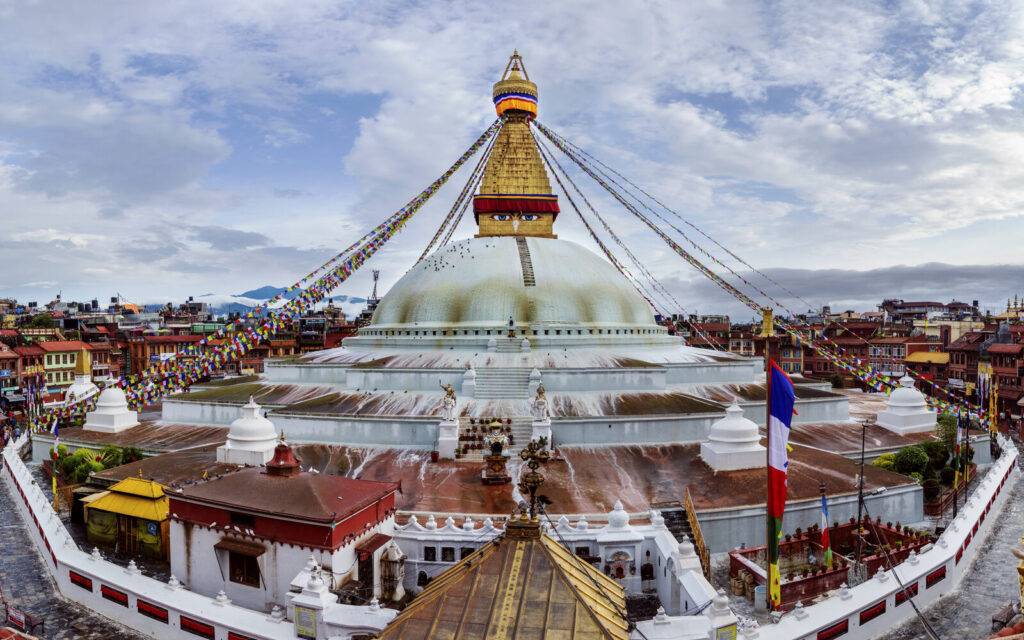
The valley is the cultural heart of any Nepal itinerary and easily fills two days. The anchor sites are Boudhanath, one of the largest stupas in the region and a working centre of Tibetan Buddhist life; Swayambhunath, the hilltop stupa above the city; and Pashupatinath, the riverside Hindu temple complex on the Bagmati (note that the inner temple is open to Hindus only — we brief groups on this in advance). Add the historic Durbar Squares of Kathmandu, Patan and Bhaktapur, the old royal plazas of palaces and temples, with Bhaktapur in particular suiting a slow walking morning for a group.
Pokhara
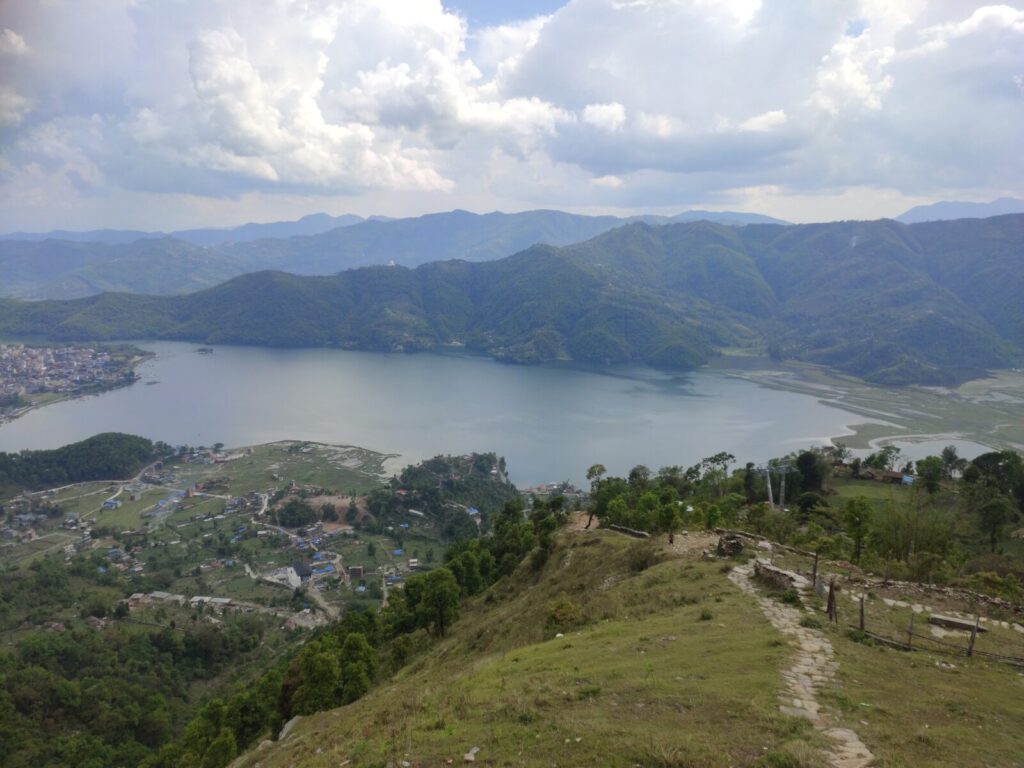
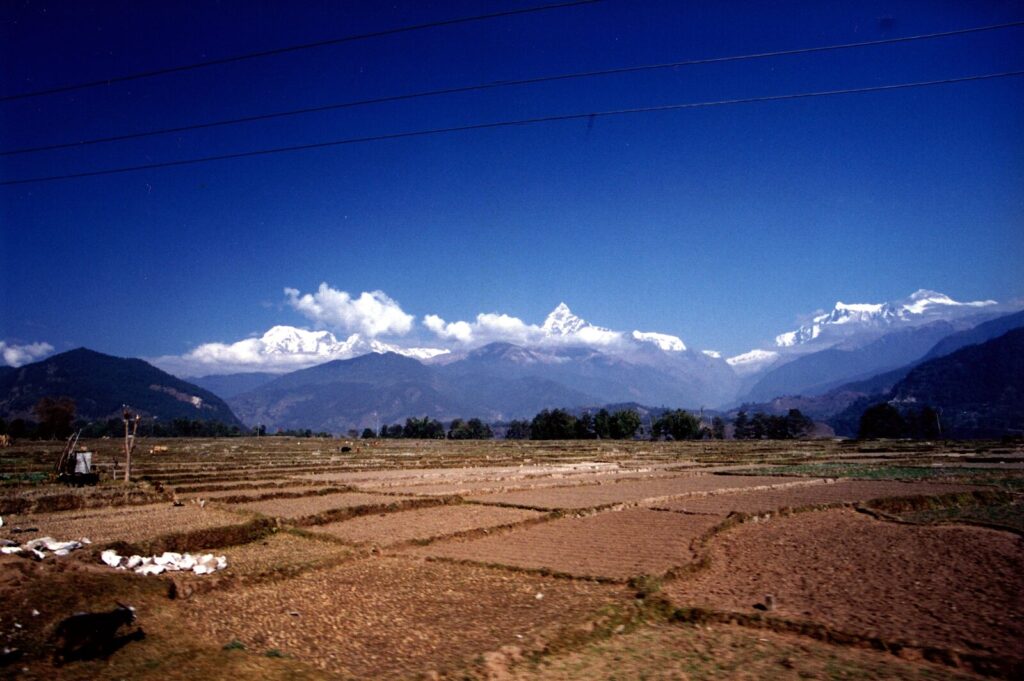
Pokhara is the change of pace. Set beside Phewa Lake with the Annapurna massif rising behind it, it offers boating on the lake, a relaxed lakeside promenade, and — on a clear morning — one of the country’s best mountain panoramas from the Sarangkot viewpoint at dawn. It is the easiest place in the itinerary to give a group a half-day of free time without anyone feeling shortchanged.
Chitwan National Park
Dropping from the hills to the subtropical lowlands, Chitwan adds wildlife to the mix. Jeep safari, guided nature walks, canoe trips and birdwatching put groups within range of one-horned rhino, deer, crocodile and, with luck, the rarer cats. Sightings are never guaranteed — we are clear with agents about that — but the safari experience and the change of landscape are reliable.
Himalayan viewpoints
For groups short on time or unwilling to fly, the valley-rim viewpoints of Nagarkot and Dhulikhel deliver wide Himalayan horizons within easy road distance of Kathmandu. An overnight at either, timed for sunrise, gives the mountain payoff without a domestic flight or a trek. Groups wanting to walk can take graded day hikes or, with more time, a teahouse trek in the Annapurna foothills — handled as a dedicated extension with its own pacing and porters.
Agents selling a wider Himalaya story often pair Nepal with its neighbour; our Bhutan DMC programme combines naturally with a Kathmandu arrival for a two-country group departure.
Visas and entry
For most nationalities, Nepal offers a visa on arrival at Kathmandu’s Tribhuvan International Airport, issued against payment for stays of 15, 30 or 90 days, with passport-sized photos and a completed form. We ask groups to arrive with photos ready and small US-dollar notes to keep the queue moving.
That said, entry rules differ by passport and they change, so we do not treat visa-on-arrival as universal. For every group we confirm the current rule for each nationality in the party well before departure and flag any passport that needs a visa in advance. Send us the passenger nationality breakdown at booking and we will return a clear entry checklist for the group.
What a Nepal group tour costs
Pricing depends on hotel tier, group size, season and how much flying versus driving the itinerary involves. The ranges below are indicative land-cost figures per person per day on twin-share, covering accommodation, transport, guiding, entries and most meals — they are a planning guide, not a quote. International airfare is excluded, and peak-season dates sit at the upper end.
| Hotel tier | Indicative USD / person / day |
|---|---|
| Standard / tourist class (3-star) | 90 – 140 |
| Superior / first class (4-star) | 140 – 220 |
| Deluxe / luxury (5-star & heritage) | 220 – 380+ |
Group size moves these numbers meaningfully — fixed costs such as the coach and the guide spread across more passengers, so a 30-pax group lands lower per head than a 15-pax one. Domestic flights (Kathmandu–Pokhara, or a flight in place of a hill drive) and any trekking extension are costed separately. Tell us the tier, season and headcount and we will return firm net rates.
A sample cultural itinerary
This 7-day Kathmandu–Pokhara–Chitwan loop is our most-requested no-trek structure for first-time groups. It flexes to 6 or 8 days by trimming or adding a viewpoint night.
Day 1 — Arrival, Kathmandu
Airport meet-and-greet, transfer to hotel, evening briefing. An easy first day to absorb the time difference.
Day 2 — Kathmandu Valley
Boudhanath, Pashupatinath and Swayambhunath, plus Kathmandu Durbar Square. Full day with a licensed cultural guide.
Day 3 — Bhaktapur and Patan
The two outer Durbar Squares at a walking pace, with time for the artisan workshops of Patan.
Day 4 — To Pokhara
Scenic drive or short domestic flight. Afternoon boating on Phewa Lake and free time on the lakeside.
Day 5 — Sarangkot sunrise, Pokhara
Early transfer for the Annapurna sunrise panorama, then a relaxed day of caves, waterfalls and lake views.
Day 6 — To Chitwan
Drive to the lowlands. Afternoon nature walk and an introduction to the park and its wildlife.
Day 7 — Chitwan safari and departure
Morning jeep safari or canoe trip, then transfer back toward Kathmandu for onward flights (an extra night is added for late departures).
The full destination outline, plus trekking and extension options, sits on our Nepal DMC services page.
Practical tips for group leaders
A few operational realities make or break a Nepal group, and briefing the group leader on them up front saves friction later.
Pace for altitude. The classic cultural loop stays at moderate elevations, but viewpoints and any trek go higher. Build in gradual ascent, keep the first day at any new altitude light, and watch for headache and breathlessness. Push the headline mountain mornings to the early hours when the air is clearest.
Plan around hill-flight delays. Domestic flights to and from the mountains are weather-dependent and delays are routine, not exceptional. We never schedule a same-day international connection off the back of a single domestic hop, and we keep a road alternative ready. Brief the group that a flight time is a target, not a promise.
Pack in layers. Valley days can be warm while pre-dawn viewpoints are cold; the spread is wide. Recommend layers, a warm jacket for early starts, sun protection, broken-in walking shoes, and modest dress for temple visits (covered shoulders and knees).
Connectivity. Mobile coverage and wifi are reliable in Kathmandu and Pokhara and patchy in the hills and around Chitwan. A local tourist SIM is cheap and easy to arrange on arrival; we can organise these for the group if asked.
Tipping. Tipping guides and drivers is customary. We give group leaders a suggested per-person amount to collect and hand over as a single pool at the end, which is simpler than leaving individuals to work it out daily.
Frequently asked questions
Do all passengers need to trek on a Nepal group tour?
No. The standard Kathmandu–Pokhara–Chitwan loop involves no trekking at all. Trekking is an optional extension for groups that want it, with its own pacing and support, and can be added without changing the cultural core of the trip.
What is the minimum group size you operate?
We build departures around the 15–40 pax range. Smaller groups are workable, but per-person costs rise as fixed costs (coach, guide) are shared across fewer travellers. Tell us the headcount and we will price accordingly.
Are mountain views guaranteed?
No operator can guarantee weather. Peak-season mornings (October–November) and winter give the best odds, and we schedule viewpoints early in the day. We always offer an alternative when cloud closes in.
How far in advance should agents book?
For October–November departures, as early as possible — peak-season hotels and guides fill months ahead. For shoulder and spring dates, a few months is usually enough, but earlier always secures better allocations and rates.
Can Nepal be combined with another destination?
Yes. Bhutan is the natural pairing for a Himalayan two-country departure, and Kathmandu is a convenient hub. We coordinate both ends as a single ground programme.
What does your ground package include?
Typically accommodation, all internal transport, licensed guides, monument and park entries, and most meals, plus full on-trip coordination. International airfare and personal expenses are excluded. We confirm exact inclusions per itinerary in the quote.
Planning a Nepal group departure? Our local team handles hotels, domestic flights, guides and full ground logistics. See our Nepal DMC services or request a group quote.
Photos: Boudhanath Stupa, Kathmandu by Bijay Chaurasia (CC BY-SA 4.0); Phewa Lake, Pokhara by Abishkar Gautam (CC BY-SA 4.0), via Wikimedia Commons.

Travel DMC Group
Travel DMC Group is a B2B destination management company handling ground services — hotels, transfers, guided tours, MICE and group logistics — across Asia, the Middle East and the Caucasus. These guides are written by our in-house operations and product team from first-hand experience running group departures.
Recommended Posts
Best Time to Visit Nepal: A Month-by-Month Guide (2026)
June 22, 2026