
Best Time to Visit Southeast Asia: A Month-by-Month Group Planner
“When is the best time to visit Southeast Asia?” is one of those questions with no single answer — the region spans the equator and several weather systems, so while one country is in glorious dry-season sunshine, another is under monsoon rain. For agents planning group departures, the trick is matching the month to the right corner of the region. Here’s the month-by-month picture we use when scheduling group tours, along with a country-by-country reference table, festival notes, and the angles we weigh by group type.
First, the two seasons
Most of Southeast Asia runs on a dry season and a wet (monsoon) season rather than four seasons. The catch is that the timing flips between the mainland and the islands, and even within a single country (Vietnam is the classic example — see our separate Vietnam planning guide). So the smart move is to plan by sub-region. If you’re new to how ground programmes get built and priced, our explainer on what a DMC does is a useful starting point — a destination management company is the operator that turns a season into a deliverable itinerary.
Mainland Southeast Asia (Thailand, Cambodia, southern Vietnam)
The reliable window is November to February — cooler, dry and comfortable, which is exactly why it’s also peak season. March to May turns hot, and the southwest monsoon brings rain from roughly June to October. For a classic Thailand–Cambodia group loop, aim for the Nov–Feb sweet spot and book early.
Maritime Southeast Asia (Bali & Indonesia, the Philippines)
The islands often run on the opposite rhythm. Bali and much of Indonesia are driest from April to October — ideal for beach and resort incentives. The Philippines is best from around November/December to May, with the typhoon risk highest between June and October. So a maritime programme can work beautifully in the very months the mainland is wet.
The year-round options (Singapore & Malaysia)
Sitting right on the equator, Singapore and Malaysia are warm and humid all year with no true dry season — rain tends to come in short, sharp bursts rather than all-day washouts. They work as a group destination in any month, which makes them useful anchors or stopovers when the rest of the itinerary is season-dependent.
Country-by-country: the best window at a glance
This is the quick-reference grid we keep open when we’re slotting a departure date. Treat the “best months” as the comfortable-and-dry window, and the “wetter / avoid” column as the period we plan around rather than a hard no — we run programmes in the shoulder months all the time.
| Country | Best months | Wetter / avoid | Note |
|---|---|---|---|
| Thailand | Nov–Feb | Jun–Oct (SW monsoon); hot Mar–May | Andaman vs Gulf coast peak at different times — split-island beach swaps are possible most of the year. |
| Vietnam | Varies by region (broadly Feb–Apr) | Region-dependent | North, centre and south run on different clocks — plan by leg, not by country. |
| Cambodia | Nov–Feb | Jun–Oct (wet); hot Mar–May | Angkor sunrises are clearest in the dry season; the wet season greens the moats and thins the crowds. |
| Bali / Indonesia | Apr–Oct | Nov–Mar (wet) | Opposite rhythm to the mainland — the go-to when Thailand and Cambodia are wet. |
| Philippines | Nov/Dec–May | Jun–Oct (typhoon risk) | Build in buffer days for island-hop legs during typhoon season; ferries cancel on weather, not schedule. |
| Singapore | Year-round | Wetter Nov–Jan | Indoor-heavy itinerary, so rain rarely derails a day — a dependable anchor city. |
| Malaysia | Year-round | Nov–Jan, esp. east-coast monsoon | West coast (KL, Penang, Langkawi) stays workable when the east coast is in monsoon. |
A closer look, country by country
Thailand
Thailand is the region’s most flexible group destination because its coasts don’t share a season. Central and northern legs — Bangkok, Chiang Mai, the Angkor-style temple circuits — are most comfortable from November to February. The beaches split: the Andaman side (Phuket, Krabi, Phi Phi) is at its best in that same Nov–Apr window, while the Gulf side (Koh Samui, Koh Phangan) holds up better into the middle of the year. That lets us keep a beach component in almost any departure month by choosing the right coast. See our Thailand ground-services page for sample routings.
Vietnam
Vietnam is the one country we never describe with a single “best month,” because the north, centre and south run on different weather systems — what’s dry in Hanoi can be wet in Hoi An on the same dates. For a multi-region Vietnam group, we plan each leg separately rather than chase one nationwide window. The detail is in our dedicated Vietnam guide; broadly, February to April gives the best odds of stitching the whole country into one comfortable run.
Cambodia
Cambodia follows the mainland pattern: November to February is the cool, dry, photogenic window, and it’s when Angkor sunrises are at their crispest. March to May is hot, and June to October is the wet season. The trade-off is worth flagging to clients — wet-season Angkor means greener surrounds, fuller moats and noticeably fewer people at the marquee temples, which suits photography and smaller premium groups. Our Cambodia page covers temple-circuit logistics.
Bali & Indonesia
Bali is the counterweight to the mainland. Its dry season runs April to October, which is exactly when Thailand and Cambodia are wettest — so a beach or resort incentive that can’t move off the mid-year months belongs here. November to March is Bali’s wet season, though even then rain tends to arrive in afternoon downpours rather than all-day cover. See our Bali page for villa and resort programmes.
The Philippines
The Philippines is best from around November/December to May, the dry stretch that lines up well with the mainland peak. The variable to manage is the typhoon season from June to October, concentrated over the central and northern islands. We run programmes through it, but we build buffer days into any itinerary that depends on inter-island ferries or light aircraft, because those cancel on weather rather than schedule.
Singapore & Malaysia
Both are warm and humid year-round with no true dry season. Singapore’s itineraries lean indoors — attractions, dining, MICE venues — so a wet afternoon rarely costs a session, which makes it a dependable Singapore anchor or stopover. Peninsular Malaysia is similar on the west coast (Kuala Lumpur, Penang, Langkawi); the wrinkle to watch is the northeast monsoon from roughly November to January, which hits the east-coast islands (Tioman, Perhentian, Redang) hard. Keep east-coast beach legs out of those months and the rest of the country stays workable all year.
A quick month-by-month guide
- November–February: Prime time for mainland Thailand and Cambodia; also good for the Philippines. Peak season — confirm early.
- March–May: Hot on the mainland; excellent for Bali and Indonesia as their dry season begins; good late-season Philippines.
- June–August: Wet on the mainland but prime dry season for Bali/Indonesia; Singapore and Malaysia fine year-round.
- September–October: Shoulder months — Bali still good, mainland rain easing toward late October.
Best time by group type
The “best” month depends as much on what the group came for as on the rain map. Three angles we weigh:
- Beach & incentive groups: these want reliable sun and pool weather, so we anchor them to a single dry coast. Mid-year (Apr–Oct) points to Bali and Indonesia; Nov–Apr points to the Thai Andaman coast or the Philippines. We avoid splitting a beach incentive across a monsoon boundary.
- Culture & touring groups: temple circuits, city tours and long coach days reward the cooler, drier mainland window of Nov–Feb — lower humidity makes full sightseeing days far more comfortable, and dry roads keep transfer times predictable.
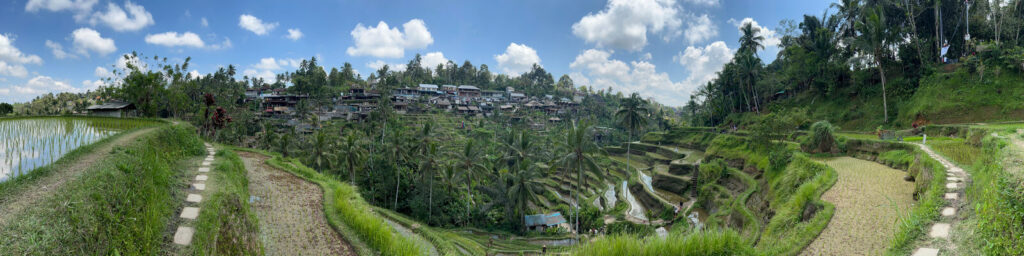
- Photography & small premium groups: these can be the exception that books the shoulder or wet season on purpose — greener landscapes, dramatic skies, full rice terraces and thinner crowds at headline sites. Angkor and Bali’s terraces both photograph better with a bit of weather in the frame.
Festivals to plan around
Some dates are a draw, others a disruption — and a few are both. Either way, plan for them, because they move prices, transport availability and hotel inventory:
- Songkran (Thai New Year, mid-April) — a genuine draw, but joyfully chaotic; transport and hotels are packed and book out early. Great for groups that want to be in the middle of it, a problem for groups that just want to transit.
- Tet (Vietnamese New Year, late January/February) — largely a disruption for touring groups: widespread closures and full transport. Avoid for standard itineraries unless the cultural experience is the point.
- Nyepi (Bali’s Day of Silence, March) — the island effectively shuts down for 24 hours, including the airport. Build it in deliberately or route around it; there’s no half-measure.
- Loy Krathong & Yi Peng (Thailand, November) — the lantern and floating-light festivals are a strong draw, especially in Chiang Mai, and they happen to fall right inside the prime dry window. Worth timing a departure to catch.
- Vesak (Buddha’s birthday, May, observed across Thailand, Singapore, Malaysia and beyond) — a public holiday with temple ceremonies; more an add-on highlight than a disruption, but expect some venue and office closures.
Frequently asked questions
What is the overall best time to visit Southeast Asia?
If you want one window that works across most of the region, November to February is the safest bet — dry on the mainland and good in the Philippines — though it’s also the busiest, so confirm dates and inventory early.
When is the best time for a Bali group trip?
April to October, Bali’s dry season, is ideal for beach and resort programmes — conveniently when the mainland is wetter. November to March still works, with rain usually arriving as short afternoon downpours rather than all-day cover.
Can you run group tours in the wet season?
Yes. Rain is often brief, prices are lower and sites are quieter — and we simply steer the itinerary toward the sub-region that’s dry that month. The main rule is to keep ferry- and small-aircraft-dependent legs out of the Philippine typhoon season unless you build in buffer days.
Why can’t you give a single best month for Vietnam?
Because the north, centre and south run on different weather systems — the same dates can be dry in one region and wet in another. We plan a Vietnam group leg by leg; see our Vietnam guide for the regional breakdown.
Which countries are good year-round?
Singapore and west-coast Malaysia (Kuala Lumpur, Penang, Langkawi) work in any month — warm, humid and without a true dry season. They make reliable anchors or stopovers when the rest of an itinerary is season-dependent. The one caveat is Malaysia’s east coast, which is best kept out of the November–January monsoon.
How far ahead should we book a peak-season departure?
For November–February mainland programmes and any departure overlapping a major festival like Songkran or Loy Krathong, the earlier the better — peak-season hotel and transport inventory tightens fast. Send us your dates and we’ll confirm availability before you commit a group.
Planning a Southeast Asia group departure? Travel DMC Group handles ground services across Thailand, Vietnam, Cambodia, Bali, Singapore and more. Request a quote with your dates and we’ll match the itinerary to the season.
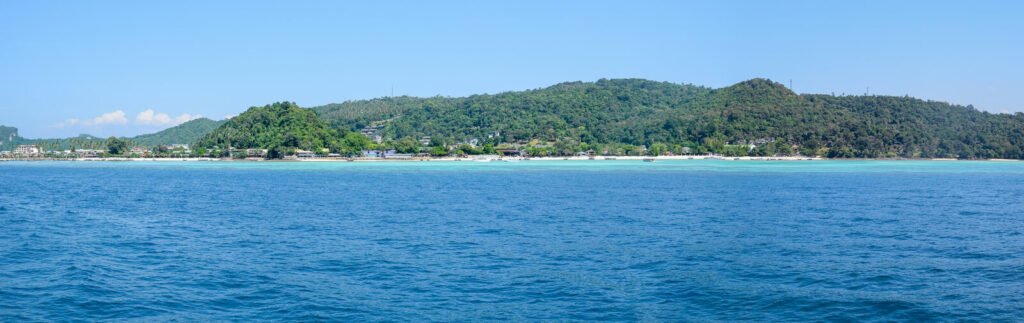
Photos: Ko Phi Phi, Thailand by Krzysztof Golik (CC BY-SA 4.0); Tegallalang rice terraces, Bali by Stefan Fussan (CC BY-SA 4.0), via Wikimedia Commons.

Travel DMC Group
Travel DMC Group is a B2B destination management company handling ground services — hotels, transfers, guided tours, MICE and group logistics — across Asia, the Middle East and the Caucasus. These guides are written by our in-house operations and product team from first-hand experience running group departures.
Recommended Posts
How to Check an AI-Built Itinerary Before You Sell It
October 20, 2026